
Task Assigned
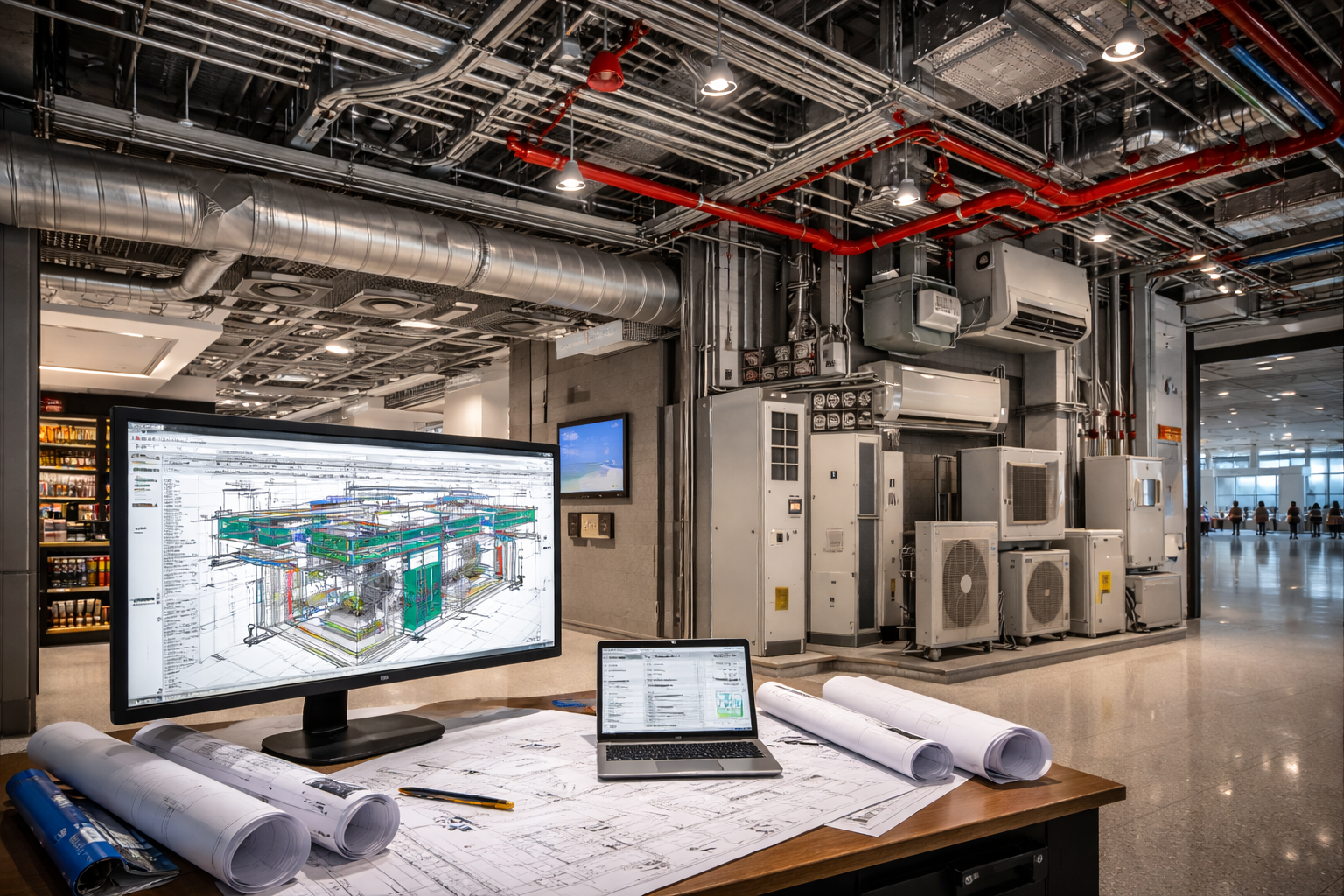
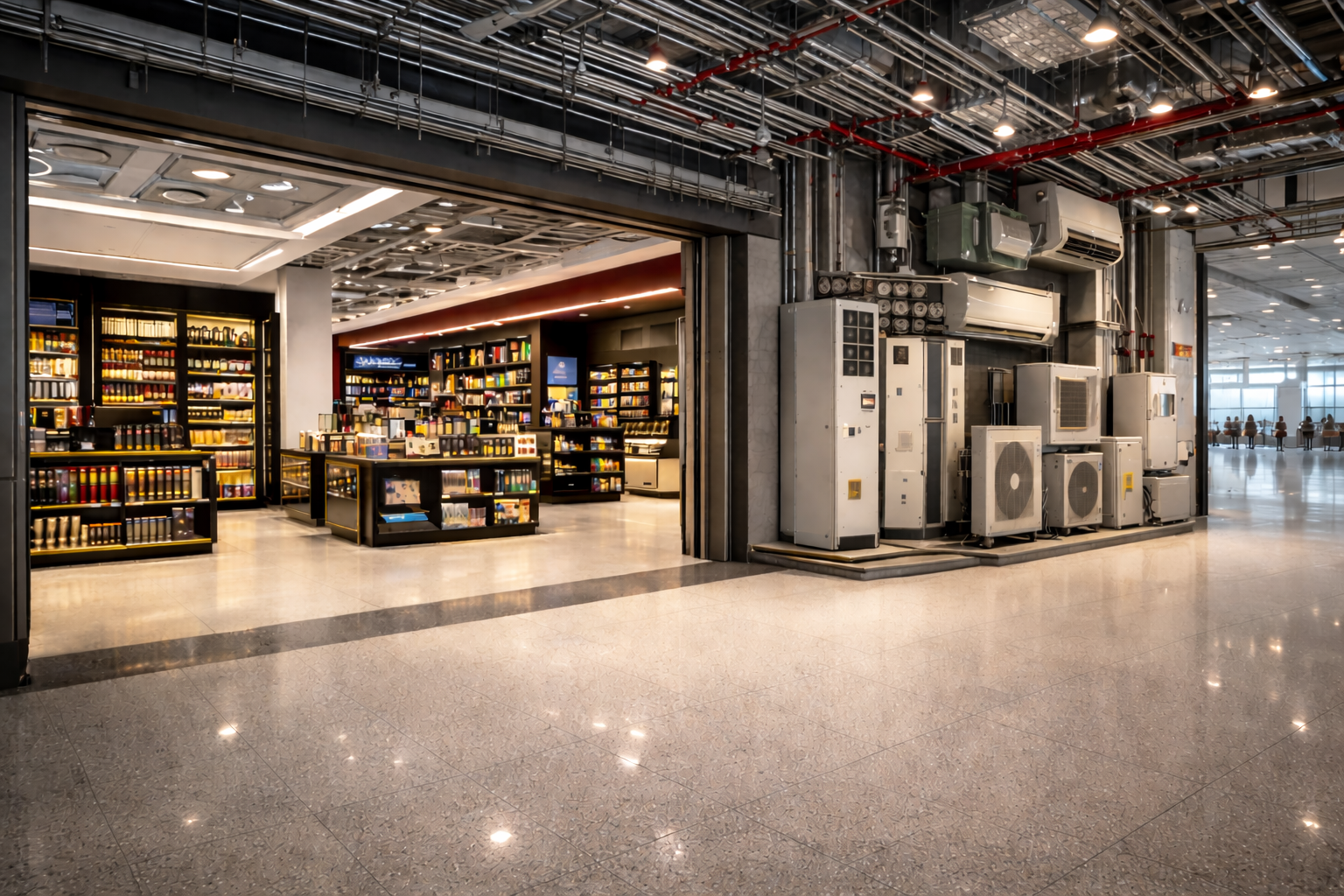
In this project, the client contracted National MEP Engineers to deliver a comprehensive mechanical, electrical, fire alarm, and fire protection engineering design. The project was related to a new duty-free retail concession space and storage area within Concourse E, Tier 2 East at Washington Dulles International Airport.
The scope comprised evaluating the airport’s prevailing HVAC and fire protection systems, producing fully coordinated Revit models, and handling interdisciplinary coordination with structural and architectural elements. It was also critical to ensure compliance with the IECC energy code and to provide 100% signed and sealed construction documents for MWAA permitting.
Project Timeline
- Phase 1 : The first job was to establish the preliminary Revit model. Our team also conducted site visits to assess legacy HVAC limitations and participated in MWAA turn-page meetings. At the end of this phase, we submitted the 30% MEPF set.
- Phase 2 : This phase began with establishing error-free coordination of sprinkler routing through structural steel. We also finalized electrical power and lighting layouts during this stage. In the end, we completed the submission of the 90% review sets for interdisciplinary scrutiny.
- Phase 3 : By the end of the final phase, National MEP Engineers addressed all final MWAA comments, generated COMcheck compliance reports, performed digital sign-and-seal, and completed the iPermit portal submission.
Additional Notes
- By the end of the final phase, National MEP Engineers addressed all final MWAA comments, generated COMcheck compliance reports, performed digital sign-and-seal, and completed the iPermit portal submission.
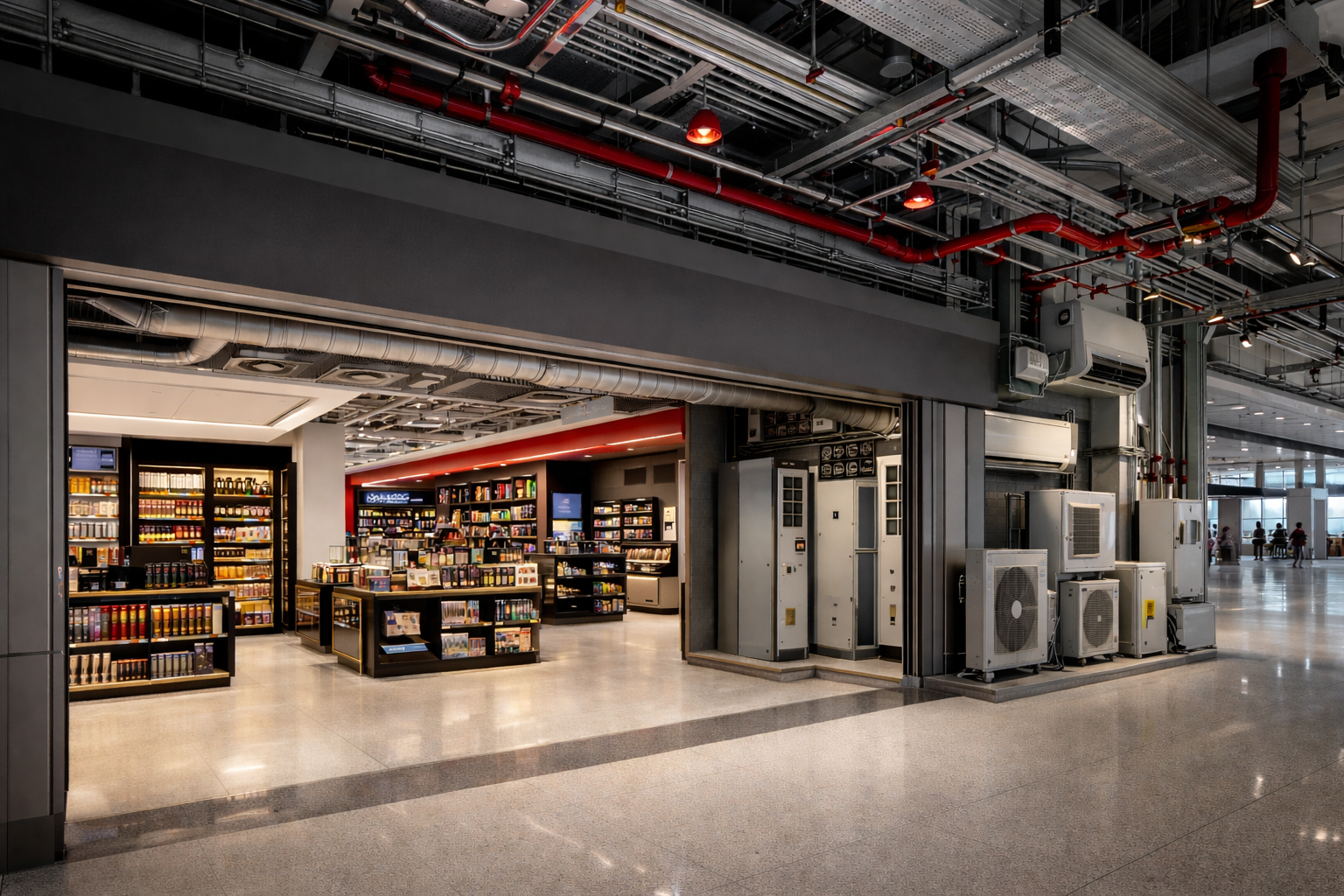
- Sprinkler routing was particularly complex due to extremely tight ceiling clearances. With detailed 3D BIM coordination in Navisworks and close collaboration with the architect, our team efficiently routed the pipe network below the roof deck and through structural steel gaps. This negated conflicts with ductwork, electrical trays, and structural anchors.
- Limited space for the technical room was also a challenge. It required cautious spatial coordination to accommodate distribution panels and transformers while sustaining complete code clearance and accessibility compliance.
- An in-depth interdisciplinary review of base-building shell drawings across disciplines was conducted upfront. This helped establish a consolidated design baseline that facilitated a streamlined project kickoff and prompt delivery throughout every phase.


