

Task Assigned
One of National MEP Engineers’ long-term clients engaged us to deliver end-to-end remote MEP design support, including HVAC system design, electrical service assessment, plumbing system coordination, and the creation of a robust, permit-ready MEP drawing set. Our tasks also included addressing code-related questions, resolving spatial constraints identified during coordination, and delivering a sealed and signed permit package suitable for local authority submission.
Project Timeline
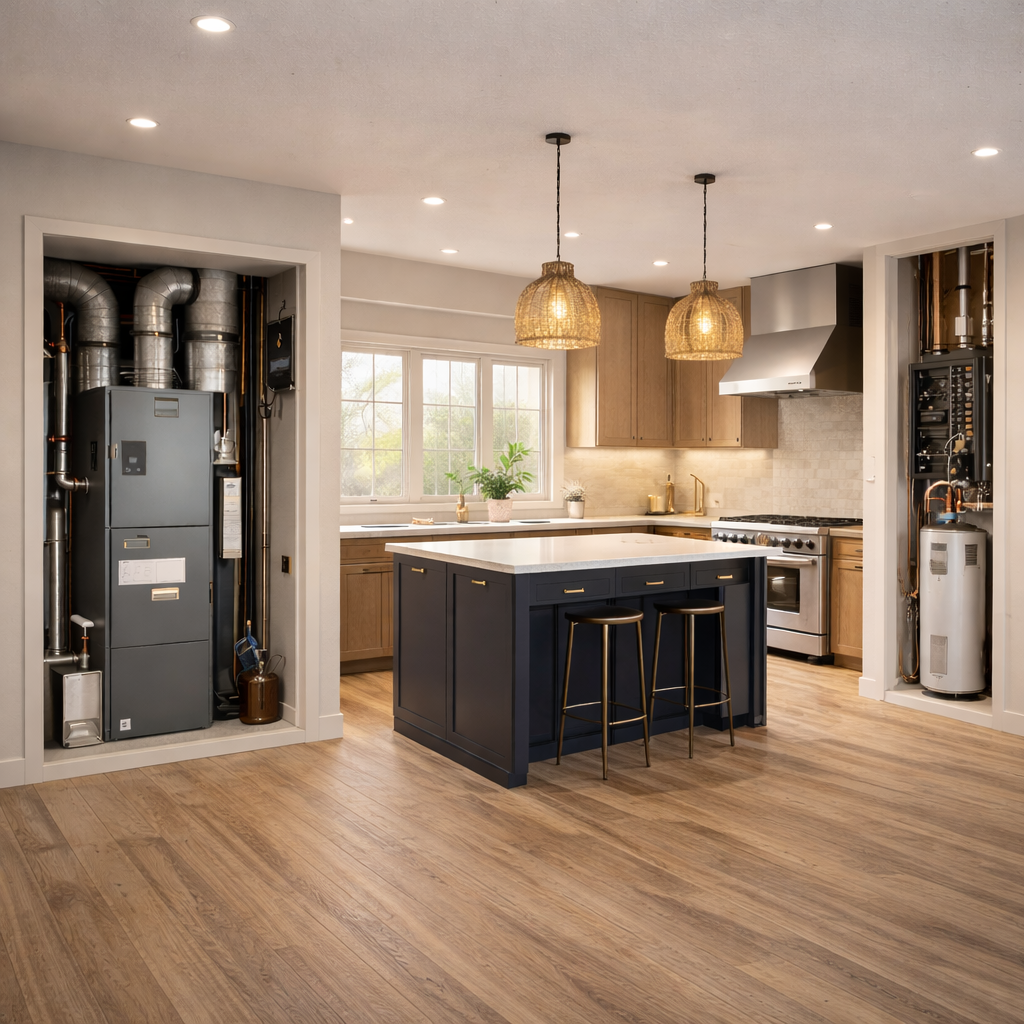
- Phase 1 : This project commenced with the establishment of a Basis of Design and a preliminary concept plan. During this stage, the focus was on specifying system strategies, including HVAC equipment positioning and assessing tank versus tankless water heater options. A 50% MEP review set was created and issued for early feedback and alignment.
- Phase 2 : The second phase of this project involved performing detailed coordination across MEP systems. Main initiatives at this stage consisted of rectifying HVAC closet space limitations, researching kitchen hood exhaust specifications associated with makeup air codes, and examining electrical fault current and service capacity. Finally, a comprehensively coordinated 100% review set was submitted.
- Phase 3 : The main emphasis of this stage was on addressing all redline comments and pending coordination tasks, including confirming the water meter location. This project came to an end with the delivery of a signed and sealed MEP permit set, submission-ready for the local authority.
Additional Notes
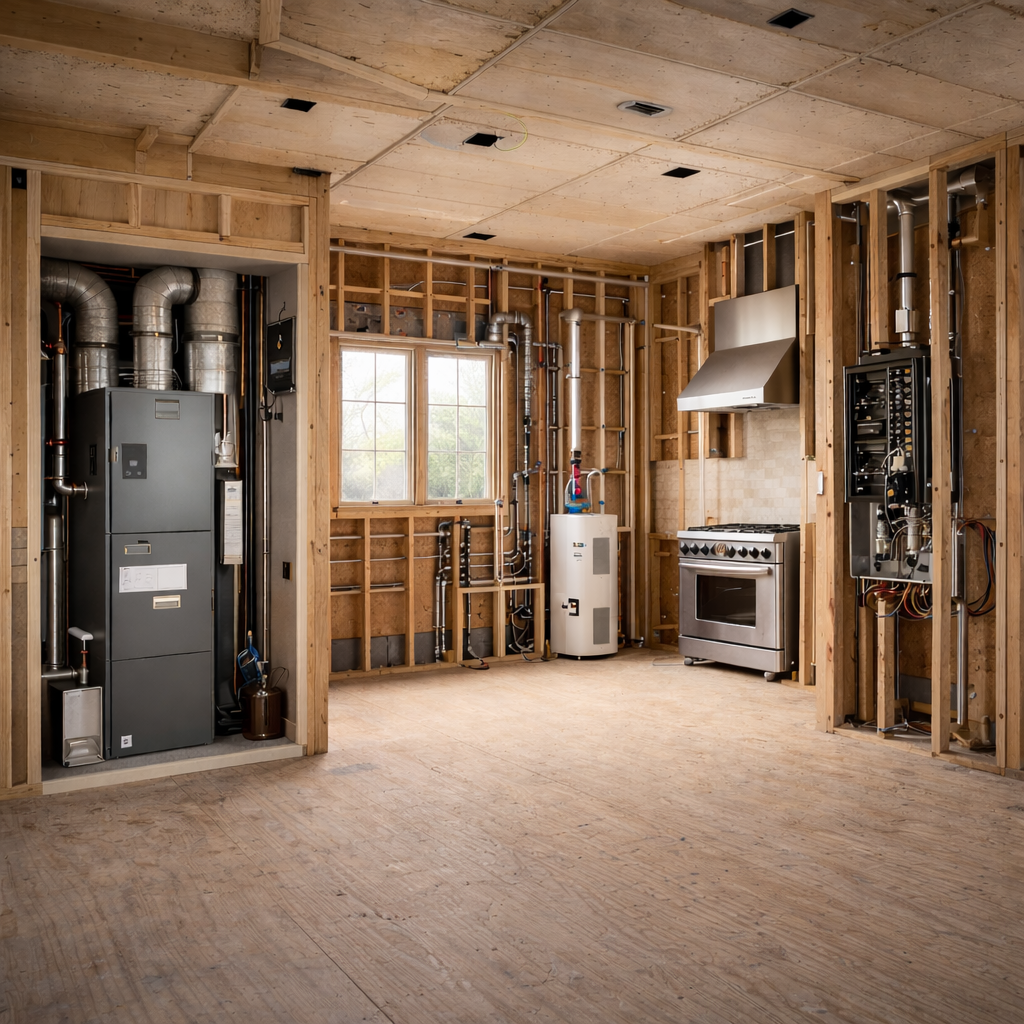
- To address inadequate space allocated for the air handling unit and the need for return air ductwork, our MEP team delivered an in-depth sketch requesting a minimum clear space of 4 feet 6 inches. After the coordination discussion, the client changed the wall location and closet proportions, ensuring proper accommodation of the mechanical system.
- Another important consideration involved the kitchen hood exhaust. The client requested a 600 CFM hood, raising concerns about whether a specialized makeup air system would be needed.
- Our team analyzed the Florida Mechanical Code and confirmed that, for a single-family residence without gravity-vented appliances, exhaust rates of up to 800 CFM are allowed without makeup air. This ensured that unwanted system complexity and cost were avoided.
- The initial electrical service capacity evaluation revealed that a tankless water heater would require an upgrade to a 300-amp service. We eliminated this extra cost by revising the BOD to include a 50-gallon electric tank water heater to maintain the prevailing 200-amp service while satisfying performance requirements.


