
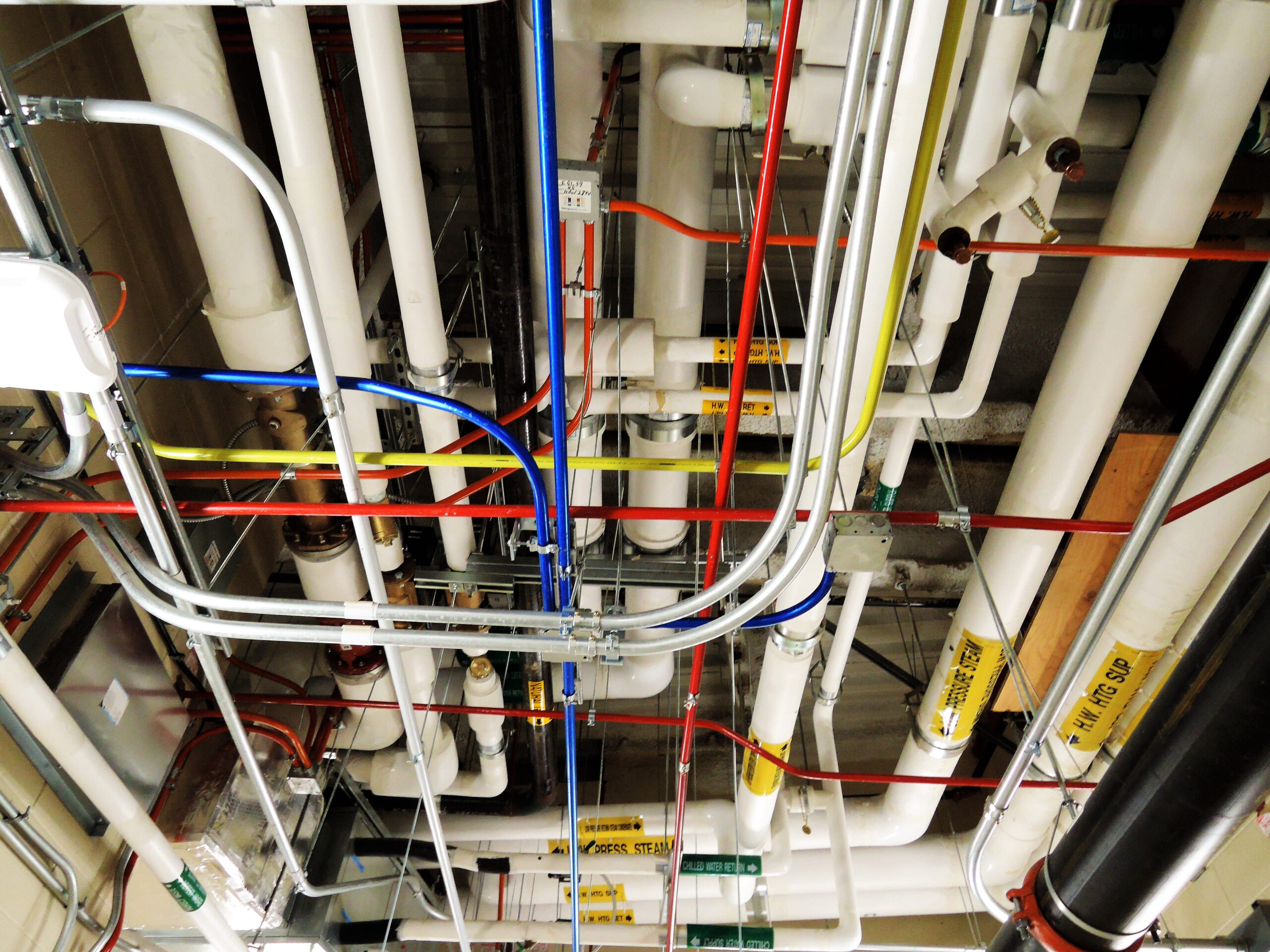
Many times, our project managers receive requests from US architects and architectural firms to design MEP systems that meet their sustainability requirements. Although sustainability is generating buzz across many sectors, the construction industry has yet to embrace it fully.
We often interact with architects seeking MEP service providers capable of delivering sustainable MEP systems. Clients ask about it, code officials demand it, and municipalities in places like California, New York, and Florida have begun treating water like the finite resource it truly is. Architecture, for better or worse, has inherited a water stewardship role that would’ve surprised designers twenty years ago.
And while architects don’t calculate fixture unit loads or size pipes, their fingerprints are all over what makes a plumbing system sustainable. Fixture selection, planning for greywater reuse, and specifying materials aren’t just technical decisions. They’re long-term financial, environmental, and regulatory decisions. They influence operating budgets, permitting timelines, RFP competitiveness, resale value, and even community perception.
This raises an uncomfortable truth: sustainable plumbing isn’t a specialty topic reserved for MEP engineers anymore. It’s an architectural strategy, plain and simple.
The Shifting Water Reality Architects Can’t Ignore
Water was once treated as endlessly available in most of the US, but the last decade has changed that thinking. Architects practicing in California already know how Title 24 and CALGreen shape nearly every project, particularly when it comes to fixtures.
Meanwhile, New York City, a place most people wouldn’t immediately associate with water shortages, has pushed higher efficiency standards primarily through policy pressures tied to Local Law 97 and WaterSense adoption. Florida’s story is different still: rising population, saltwater intrusion, and stressed aquifers have made conservation more practical than ideological.
Even jurisdictions without formal mandates are increasingly influenced by insurance underwriting, utility incentives, campus sustainability goals, or developer requirements tied to ESG reporting. In other words, code may be the minimum, but the industry is drifting toward a higher baseline.
So, when architects ask whether sustainable plumbing is becoming mandatory, the short answer is yes. The long answer is that it already is, just unevenly.
Why Architects Influence Water Efficiency
Many architects still assume that plumbing sustainability decisions come into play only once the engineer shows up. However, MEP consultants typically receive a program, not a blank slate. If the program doesn’t account for low-flow fixtures, or if the building layout makes greywater routing impractical, the best-intended engineering solutions become expensive or impossible.
Architects influence:
- The fixtures clients see in early presentations.
- How rooms stack and whether plumbing cores align.
- Material conversations during spec writing.
- Whether a project even considers greywater reuse.
- Aggressively sustainable goals appear in the Basis of Design.
Engineers can design a highly efficient system, but the project won’t get there unless architects lay the groundwork. This is about shaping design environments where sustainable plumbing becomes achievable instead of burdensome.
Low-Flow Fixtures: The Gateway to Sustainable Plumbing
There’s a misconception that sustainable plumbing begins with advanced water reuse systems or innovative materials. In reality, the most significant impacts still come from simple, everyday products: toilets, faucets, showerheads, and urinals. The average commercial or multifamily building consumes most of its indoor water through fixtures, not cooling towers or other equipment.
Flow rate standards vary across jurisdictions, but most architects working in water-conscious areas generally encounter:
- Toilets at or below 1.28 gallons per flush.
- Bathroom faucets near 1.2 gallons per minute.
- Showerheads are capped at around 2.0 gpm.
- Restrooms under 0.5 gpf, and sometimes much lower.
EPA WaterSense remains the easiest way to verify performance and efficiency, and many cities increasingly reference it informally, even if not mandated.
Still, specifying low-flow fixtures isn’t simply a matter of choosing the lowest numbers. If efficiency comes at the expense of user experience, the design fails. Architects have seen this firsthand with poorly performing 1.1 gpf toilets or low-pressure showerheads in hospitality settings. And when clients complain, architects, not manufacturers, often take the blame.
Which is why architects evaluating fixtures need to ask questions like:
- Has the product been tested in similar building types?
- Does the manufacturer offer performance data beyond marketing claims?
- Will reduced flow affect the drain line’s carrying capacity in longer plumbing runs?
- Is the client comfortable discussing performance concerns upfront?
When the architectural conversation moves beyond compliance into lived experience, clients listen differently.
A Project We Worked on in Fresno
About two years ago, a two-person architecture studio in Fresno, CA, worked on a 16-unit affordable housing renovation. The owner assumed low-flow fixtures would increase construction costs and wasn’t convinced tenants would notice the difference anyway. Instead of leaning on sustainability talking points, the architects presented a simple breakdown: first-cost-neutral, 15-year operating savings, and projected water reduction based on local occupancy averages.
They also went a step further and asked National MEP Engineers to verify the performance of the drain lines because the existing building had long horizontal runs. That reassurance, not a flow rate number, closed the conversation.
The owner signed off without another objection. Construction proceeded without revision requests. And months later, the firm used the experience as a differentiator on another RFP interview, because sustainable plumbing had become part of their architectural voice, not a reactive technical check.
Greywater Systems: Potential That Depends on Early Design Decisions
If low-flow fixtures are the entry point, greywater reuse is where architects can start reshaping water thinking altogether. However, it’s also an area where mistaken assumptions can kill the idea long before an engineer reviews feasibility.
Most architects know greywater generally refers to drainage from lavatories, showers, bathtubs, and sometimes laundry, not from toilets, dishwashers, or kitchen sinks. What many underestimate is how much space, routing clarity, and early planning matter.
Greywater works best when design teams:
- Stack plumbing groups vertically.
- Dedicate a room for filtration and storage equipment.
- Coordinate with landscape teams if irrigation reuse is anticipated.
- Discuss maintenance expectations with ownership early.
When these conversations wait until construction documents, the cost-benefit math often falls apart.
Regional Realities Matter
- In California, greywater systems are commonplace enough that many residential designers ask about them before MEP engineers do.
- New York City allows them but tends to treat them as engineered alternatives requiring additional permitting steps.
- In Florida, some municipalities encourage them for irrigation due to groundwater concerns, while others remain cautious.
The feasibility question isn’t whether greywater is technically possible; it usually is, but whether the jurisdiction, client, and building typology align.
A Scenario That Feels Familiar
A mid-sized developer in Orlando approached an architectural firm about a speculative office building. Nothing about the program hinted at sustainability innovation, but the architects, aware of rising water rates and landscape irrigation costs, proposed exploring a dedicated greywater system for landscaped outdoor areas. Rather than promising savings, they framed it as a due diligence conversation.
When the MEP consultant ran the numbers, they realized the landscaping water demand significantly exceeded the projected output from bathroom fixtures. The idea shifted. The system was reduced, capital expense dropped, and the developer ultimately approved it because it met two goals: environmental responsibility and predictable long-term utility billing. Had greywater been introduced after schematic design, it likely would’ve been dismissed as impractical.
Material Choices: The Sustainability Conversation People Avoid
Plumbing material selection rarely shows up during early architectural coordination meetings, partly because architects understandably don’t want to dictate pipe sizing or routing. The choice between copper, PEX, and PVC has sustainability implications worth acknowledging, especially in municipalities where environmental review is becoming more rigorous.
Copper remains durable and recyclable, but it has a high embodied energy. PEX has become the pragmatic favorite in many low-rise projects due to ease of installation, reduced fittings, and lower labor hours. PVC and CPVC are inexpensive and widely used, but some architects and owners question their long-term environmental impacts and disposal challenges.
Some manufacturers now provide Environmental Product Declarations, Health Product Declarations, or Declare labels. Architects who reference such documents in specifications, not as mandates, but as transparency expectations, signal a sustainability mindset without overstepping scope.
Even a sentence like, “Provide products with available HPDs or EPDs when possible,” communicates architectural values and encourages better decision-making downstream.
The Economics: Sustainability Isn’t Free, Waste Is Expensive
Any architect who has presented a sustainability proposal to a cost-sensitive client knows what comes next: a spreadsheet, a construction budget nearing its threshold, and some variation of the sentence, “What if we skip this and value engineer later?”
This is where sustainable plumbing carries an advantage over many green strategies. Energy modeling, high-performance glazing, and solar installations often require sizable upfront investments. Low-flow fixtures usually don’t. Greywater can, but the numbers frequently improve dramatically compared to long-term landscaping or cooling tower costs. Material specification shifts may cost nothing.
Instead of arguing sustainability from principle, architects can frame it through:
- Regulatory risk avoidance
- Long-term operational savings
- Tenant comfort and marketability
- Developer ESG positioning
- Permitting confidence
Water-efficient design is predictable, quantifiable, and relatively low-disruption. In many cases, it’s the simplest sustainability win available.
Common Traps Small Architectural Firms Fall Into
Every architect has been there:
- A project team selects fixtures after finishes are approved, limiting options.
- Greywater potential is discovered too late in the process.
- A well-intentioned low-flow specification triggers post-occupancy complaints.
- Plumbing discussions occur only during the production of construction documents.
These issues aren’t signs of negligence; they reflect the fragmented state of construction workflows. However, clients don’t see workflow mechanics. They see outcomes.
Sustainable plumbing becomes easier when discussed before space planning and budgeting rather than after. And, importantly, when architects feel comfortable asking MEP engineers questions that go beyond code compliance.
What Strong Architectural-MEP Collaboration Looks Like
In practice, sustainable plumbing succeeds when architects and engineers talk early, casually, and without defensiveness. MEP consultants aren’t waiting to be told what to do; they simply need clarity on the project’s intent.
Conversations that help:
- “We’re considering WaterSense fixtures. Any concerns?”
- “Is greywater plausible in this jurisdiction?”
- “What material considerations should we flag to the owner?”
- “Would fixture scheduling earlier help with estimating?”
Good engineering firms respond collaboratively because they know early communication prevents redesigns, rushed drawings, and change orders later.
And when architects work with MEP partners like National MEP Engineers, firms familiar with jurisdictional differences, client sensitivities, and the realities of permitting, they receive guidance on these issues. They receive direction anchored in constructability, budget, and long-term performance.
Sustainable Plumbing as Competitive Differentiation
Architecture is a referral-based business. Smaller firms often rely on reputation rather than advertising budgets. When firms consistently deliver buildings with lower water bills, fewer operational surprises, and thoughtful fixture selections, clients notice, developers, especially, notice because they manage asset portfolios, not single projects.
Sustainable plumbing, therefore, becomes a business development tool rather than just a technical responsibility. It communicates foresight, reliability, and awareness of broader environmental and financial contexts.
And in an industry where project timelines are accelerating, and staffing remains lean, architects who understand sustainable plumbing quickly earn trust, sometimes before presenting a single rendering.
Final Thought: Sustainable Plumbing Isn’t a Trend
If sustainability were merely fashionable, architects could wait it out. However, water scarcity, infrastructure stress, and regulatory tightening suggest otherwise. The built environment consumes enormous quantities of potable water. Buildings must change, and design leadership increasingly falls to architects, not because they asked for it, but because they’re positioned closest to decision-making.
Sustainable plumbing isn’t solved through revolutionary technologies. It’s solved through thousands of practical, well-informed decisions made across typical projects every day. The firms that treat plumbing as a design conversation, not an afterthought, will deliver buildings that age well, cost less to operate, and remain compliant long after ribbon-cuttings.
When Architects Want a Partner, Not a Plan Set
For architectural firms that understand the importance of sustainable plumbing, though don’t want to navigate the complexity alone, the right engineering relationship makes a difference.
National MEP Engineers supports architectural studios across the US, especially small and mid-sized practices, by providing coordinated, accurate, and timely MEP drawings grounded in real-world constructability. Their approach emphasizes common-sense engineering, predictable delivery, and practical fixture and plumbing recommendations informed by jurisdictional experience. With a 250+ production team led by US-licensed PEs, they’re structured to offer high-quality service at competitive pricing, without forcing architects into one-size-fits-all solutions.
If your firm wants to integrate sustainability into plumbing decisions with confidence and ensure those decisions remain buildable, code-aligned, and cost-conscious, collaborating early with a knowledgeable MEP partner can make the process smoother.


