
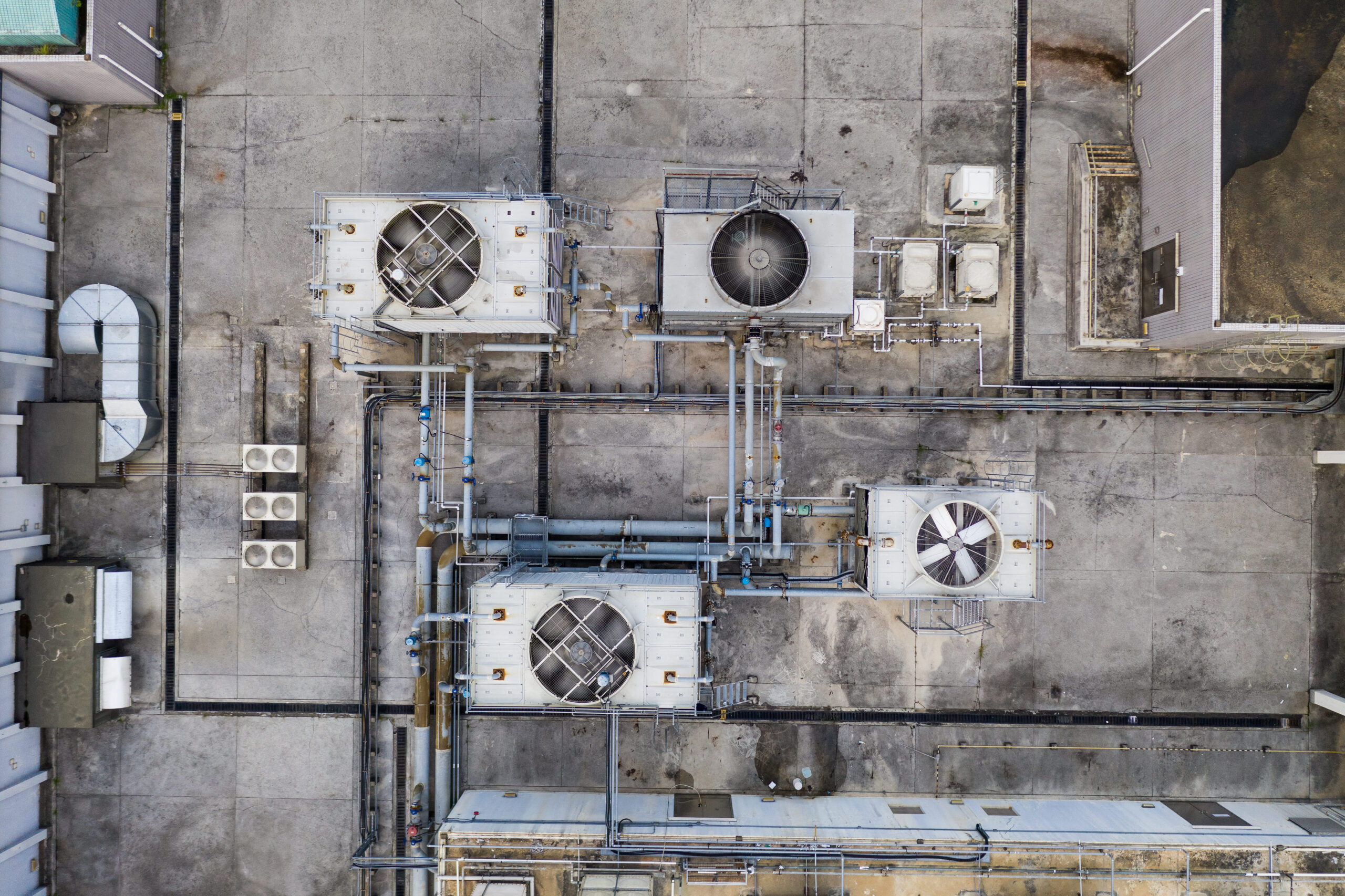
Architects and contractors are often subject to a persistent challenge while working downtown. Fitting robust MEP systems into premium spaces is challenging. An interesting fact about urban infill development is that it calls for each available inch to serve multiple purposes. In this kind of project, mechanical rooms cannot dominate valuable floor plans. This reality has remolded MEP design in constrained spaces.
Innovation has given us small-footprint HVAC and MEP solutions that work successfully within downtown realities. One must acknowledge that meticulous MEP planning ultimately defines whether a building will be profitable or problematic. Space constraints are an aspect shaping design philosophy, choice of materials, and system configuration.
Understanding these solutions helps architects and general contractors navigate construction’s most prevalent challenges better. Urban infill projects present different MEP challenges that differ markedly from those in suburban projects. In the U.S., the majority of downtown sites are surrounded by existing buildings and are constrained by small land parcels.
Confined spaces for HVAC infrastructure imply that systems need to fit into irregular or smaller areas. Here, cutting-edge solutions can boost efficiency without compromising architectural integrity. They can enable GCs and architects to operate within spatial realities while guaranteeing conformance to energy codes.
Distinctive Constraints and Regulatory Challenges
First and foremost, it is essential to understand what urban infill really means. So, it is the procedure for developing vacant or underutilized parcels of land within an existing urban area. The purpose here is to use the space effectively, which is already part of the urban environment. From another angle, urban infill emerged to augment the density and functionality of urban areas while curtailing the need to expand to underdeveloped zones.
Nevertheless, this kind of site highlights spatial limitations that are unseen in suburban projects. Zoning restrictions seldom limit modifications to buildings, particularly in regions with historical infrastructure. When lot coverage ratios increase, mechanical rooms become especially challenging. Additionally, the dense urban setting requires HVAC systems to operate with minimal noise. It is also evident that disturbances to surrounding tenants increase design complexity.
Infill projects often face outdated infrastructure that needs to integrate seamlessly with contemporary MEP systems. Older buildings next to urban infill sites may have incompatible utilities. This necessitates designers to rethink system routing and equipment positioning in an entirely new, strategic way. Note that construction delays become extremely expensive in urban settings when weather factors are involved. These struggles demonstrate why small-footprint HVAC and MEP solutions are now key to successful urban development.
Innovative Design Strategies for Compact Systems
Urban infill sites call for unique, modern MEP design solutions. These solutions depend heavily on early coordination among architects, engineers, and contractors. As a result, BIM is fundamental to this process. Various BIM tools are now available that help professionals visualize spatial conflicts and refine routing.
Additionally, mechanical room layouts can be improved years ahead of crews starting to break ground. The best part of this approach is that it helps remove spatial conflicts and detect interferences before expensive rework.
Having a unified design collaboration is vital for ensuring that MEP systems assist both spatial and functional project objectives. Instead of treating mechanical systems as afterthoughts, proficient teams conceptualize building design considering specific MEP constraints. Consequently, choosing the system becomes a tactical decision when engineers opt for high-performing equipment with smaller footprints. Niche layouts and compact equipment, coupled with stacked infrastructure, free up valuable interior areas.
Variable Refrigerant Flow (VRF) systems are a great example of compact, efficient HVAC and MEP solutions. These systems can dynamically adapt to refrigerant volume and align with real-time requirements, using refrigerant as the central heating and cooling medium. VRF systems dominantly eradicate conventional bulky ductwork and decrease energy losses. They also offer accurate zone-by-zone temperature control, a must-have for mixed-use infill projects where ground-floor retail needs distinct conditions from upper-level residential.
Moreover, ductless mini-split systems are a well-proven solution for constrained downtown environments.
- These systems work without ductwork. These use individual wall or ceiling-mounted blowers connected through a small conduit to a single outdoor unit. This facilitates zoning with models assisting up to four indoor units.
- Mini-split systems also avoid energy waste associated with ductwork, which accounts for over 30% of air conditioning usage. Accordingly, there is no need to expand the existing ductwork or develop new riser shafts that would take up valuable floor space.
It is essential to understand that modular mechanical room design has surfaced as a game-changer for urban infill projects. Apparently, modular rooms can shorten build time, optimize space, and minimize expenses by merging heating, cooling, and plumbing into pre-engineered, compact units. In off-site fabrication, manufacturing happens simultaneously with site preparation. As a result, construction time is reduced considerably. Quality also enhances as a consequence of factory-controlled precision.
Benefits of Coordination, QC, and Prefabrication
How design teams stay away from expensive on-site conflicts has fundamentally transformed, thanks to BIM-powered clash detection. Detecting interferences between MEP and structural components early allows teams to resolve conflicts before they reach the site. This ensures the avoidance of high-cost reworks.
Evidence also shows that coordinated BIM models offer a single source of information to reduce discrepancies between drawings. This enables instant collaboration between engineers, architects, and contractors. To maintain continual quality control, this is pivotal.
When MEP systems are prefabricated off-site, teams can rely on the projected schedule for infill projects. This technique can contribute to reducing waste to less than 5%, which then translates into cleaner job sites and boosts community relations.
It is compulsory for urban infill projects in the U.S. to navigate state and local energy protocols effectively. Energy efficiency codes, including IECC and ASHRAE 90.1, define the minimum requirements for MEP systems. According to ASHRAE 62.1 and 62.2 standards, HVAC systems need to deliver sufficient ventilation to maintain indoor air quality.
Despite their spatial limitations, infill projects should comply with these standards. Small-footprint HVAC and MEP solutions can fulfill compliance requirements by means of innovative equipment selection, cutting-edge controls, and system integration.
Ductless mini-splits and VRF systems naturally satisfy efficiency norms because of their ability to avert duct losses. So, when design takes efficiency targets into account, it prevents late-stage complications that often require expensive modifications.
Practical Implementation and Project Outcomes
Mixed-use development and downtown revitalization projects signify how small-footprint HVAC and MEP solutions can foster successful urban infill construction. Mixed-use projects encounter the demands of diverse building types. For instance, ground-floor retail calls for varying temperature control as opposed to upper-level residential.
On the other hand, commercial spaces need distinct plumbing requirements. Therefore, experienced MEP engineers must specify systems that accommodate divergent requirements while taking up minimal space.
Well-executed infill developments prioritize early-stage coordination across design disciplines. When MEP teams operate in isolation, on-site system clashes are common. This leads to expensive field modifications that ripple through both budgets and schedules. BIM-powered coordination guarantees that disciplines consistently review clash reports and modify models iteratively.
Adaptive reuse projects exemplify how small-footprint MEP solutions serve throughout a building’s life and extend economic viability. To retrofit MEP systems into prevailing structures, there is a requirement for ingenious space optimization and creative routing. Strategies to choose equipment must honor architectural heritage while guaranteeing modern performance. Compact ductless systems become essential to allow for building transformation.
Conclusion
Urban infill development is one of construction’s most technically demanding frontiers. Increasing usable space converges with providing completely functional building systems. Moreover, evidently, small-footprint HVAC and MEP solutions have evolved extensively to become industry standards from specialized techniques.
GCs and architects currently design downtown projects that surpass expectations while honoring spatial realities. Ductless mini-splits, variable refrigerant flow systems, and modular mechanical rooms are now the most successful strategies for urban infill projects.
Therefore, for architects and GCs, the road forward includes identifying MEP design as the basis for project success. It is also crucial to bring MEP proficiency to schematic design to improve outcomes substantially. Leveraging BIM for clash detection helps prevent expensive issues.
National MEP Engineers offers the specialized skills needed to address these challenges. Through our MEP engineering, MEP BIM coordination, MEP drafting, and sustainability design solutions, we can transform tight-site constraints into opportunities.
Partner with National MEP Engineers to unlock urban infill sites’ full potential.


