
The entire construction landscape has changed dramatically in the past few decades. The sector has seen several advancements, especially in technological integration. Today, when you design a building, you are determining whether MEP systems can become intelligent assets in the coming years.
It is true that most architectural designs now emphasize spatial arrangements. They want MEP systems to be adaptable to constraints. This is precisely where a fundamental problem arises. Buildings designed without considering digital twin readiness cannot support innovative MEP systems.
Digital twin technology depends on live data from sensors within MEP infrastructure. These sensors require niche architectural provisions at the time of design.
Your choices regarding equipment room locations, routing pathways, and ceiling heights determine whether MEP systems gather and transfer performance data. They find out whether facility managers can supervise HVAC efficiency or anticipate electrical system failures. Thus, integrating digital twin readiness into architectural design implies preparing for innovative MEP systems from the earliest schematic drawings.
Architectural Choices That Foster Smart MEP Systems
Every single architectural design decision either facilitates or prevents future MEP intelligence. During conceptual design, when space is allocated for equipment rooms, it signifies whether those rooms can accommodate monitoring infrastructure. When architects formulate ceiling plenum depths, they need to ensure sensor networks have routing pathways. These basic decisions influence MEP system properties for the building’s whole life.
Specific architectural provisions are paramount to innovative MEP systems. It is indispensable that every piece of equipment has access for sensor installation, and that no finished surfaces are demolished. Cable routing paths should connect sensors to central monitoring systems.
Besides, electrical capacity should be preserved for devices that are not there yet. When architects plan for these provisions during design, they create buildings with digitally intelligent MEP systems. In their absence, buildings require costly retrofits to implement basic monitoring features.
It is well known that MEP systems operate within spatial frameworks defined by architectural choices during conceptual and schematic design. If these frameworks do not constitute digital infrastructure, MEP engineers encounter impossible tasks. It necessitates designing systems that meet immediate functional requirements while integrating future monitoring needs into spaces never planned for that purpose. This clarifies why most buildings struggle to support digital twin technologies effectively.
BIM as the Link Between Design and Digital Twins
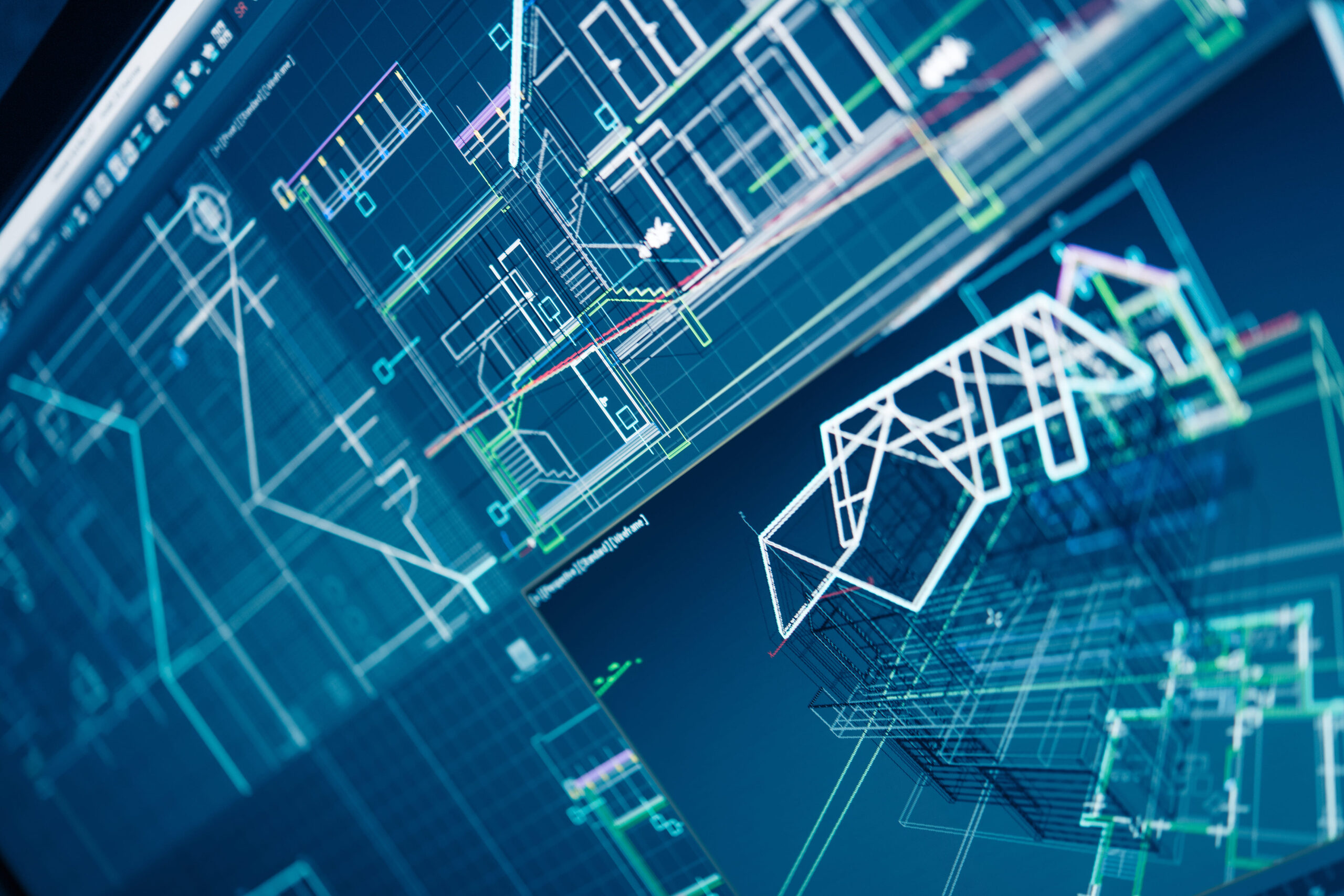
Digital twins need a data foundation. And Building Information Modeling is what helps create that foundation. When a BIM model captures just the architectural geometry, it delivers restricted value. In contrast, when a BIM model documents service routing, equipment locations, spatial relationships, and infrastructure protocols, it establishes the foundation for innovative MEP systems.
The Level of Development is another factor that directly shapes digital twin readiness. At 300 LOD during the design creation phase, architects can ensure geometric precision and spatial relationships. This level documents where equipment is and how systems connect. It also shows where monitoring infrastructure should be integrated.
Here, MEP engineers utilize this architectural framework to design systems that take into account sensor placement. They define the cable routing paths and power requirements for monitoring devices. MEP specialists must also document the data collection techniques that facility managers will implement years later.
With models advancing to LOD 400 during construction documentation, the link between smart MEP and design becomes explicit. In this provision, construction-level detail contains fabrication specifications and connection methods. When specifications integrate sensor mounting protocols and data connectivity, it becomes easier for contractors to build MEP systems ready for digital twin activation. In such circumstances, building handover comprises functional MEP systems that can become smart by means of monitoring technology integration.
Keep in mind that GCs benefit when BIM models resonate with digital twin readiness. They prefabricate elements with pre-installed sensor mounts. Moreover, they route data cabling simultaneously with MEP distribution systems. They also assess connectivity during construction instead of detecting gaps during commissioning.
Planning Spatial Specifications for MEP Intelligence
Conventional architectural design deals with MEP systems as space consumers that compete with building functions. Digital twin readiness calls for reversing this perspective. MEP systems with monitoring features require particular spatial provisions that architects should plan deliberately.
Below are some vital spatial planning strategies:
- Equipment rooms should offer access for sensor installation and upkeep. Here, the ceiling heights must also accommodate overhead cable routing and wall space for monitoring panels that link field devices to central systems at every stage.
- Vertical shafts and horizontal pathways require additional capacity beyond immediate MEP requirements. This ensures effective sensor networks and data cabling routes without penetrating fire-rated assemblies or sacrificing structural elements during retrofit installations.
- Ceiling plenum spaces should involve coordinated depth planning, constituting duct routing, pipe distribution, data infrastructure, and electrical conduit concurrently. This eliminates circumstances where monitoring devices do not fit after construction has been completed.
- Mechanical rooms demand specific zones for IoT devices detached from primary equipment. This guarantees the provision of power sources, technician access, and network connectivity without the need to shut down critical systems.
Bear in mind that these spatial requirements have almost no cost during design. Architects who keep additional plenum depth facilitate sensor networks.
Needed Data Infrastructure for Architectural Design
Digital twins have the capability to revolutionize MEP systems from status infrastructure to data-extracting assets. This asks for architectural specifications for data infrastructure, along with conventional MEP distribution. Sensors that keep track of HVAC performance require power connections. Additionally, temperature sensors mandate network pathways to transfer readings. As for occupancy sensors, integration with central monitoring platforms is a significant requirement.
Architects foster these connections with the help of deliberate infrastructure planning when design creation is underway. Here, electrical distribution systems should entail capacity reserved for monitoring equipment. Panel schedules are another essential component that should be able to recognize circuits for sensor networks. Load calculations must also entail monitoring infrastructure and MEP loads. Remember that these specifications guarantee that activating digital twin properties does not necessitate panel replacements long after occupancy.
On the other hand, data routing paths should have architectural coordination equal to MEP distribution systems. Conduit and cable tray systems must have the capacity for communication cabling that connects sensors with monitoring platforms. These pathways need to be routed effectively with additional distances that limit network performance. Architects have the responsibility to coordinate these routes when the design is ongoing. This assures that data infrastructure is integrated with finishes and there is no need for exposed conduit during retrofitting.
Summing UP
So, the integration of digital twin readiness into architectural design is pivotal to constructing buildings where MEP systems are intelligent assets for the future. Architectural choices during the design phase denote whether facility personnel can monitor performance, boost efficiency, and forecast maintenance requirements years later.
National MEP Engineers knows that smart MEP systems begin when architectural design creation is underway. Through robust MEP engineering services, MEP BIM coordination, and cooperative design development assistance, we help GCs and architects construct buildings where intelligent systems are foundational properties.
National MEP Engineers are committed to ensuring that buildings are connected, responsive assets that deliver performance optimization nonstop.


