
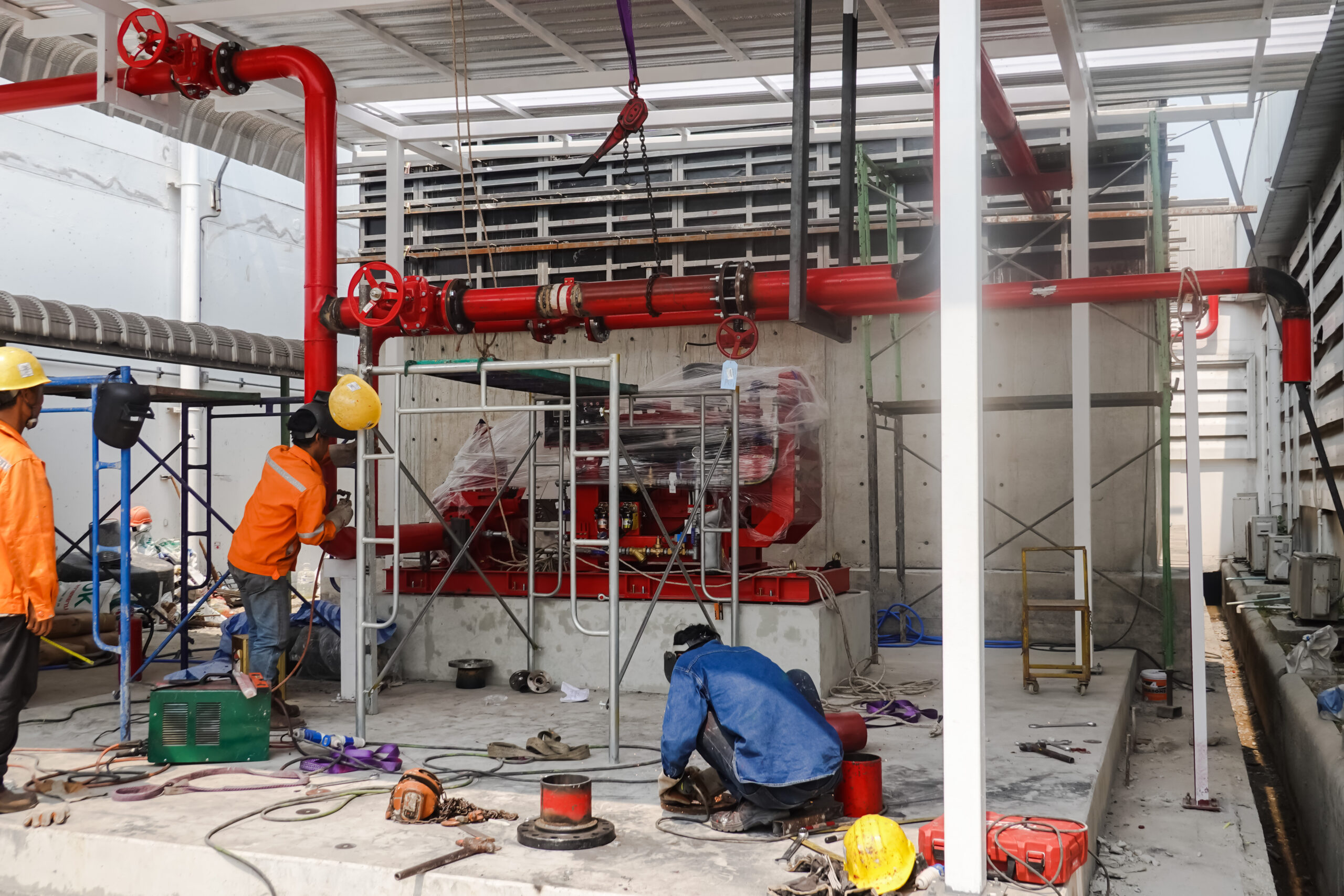
If your firm is looking to shave weeks off construction schedules, reduce change orders, and hand over cleaner, tested systems to the contractor, offsite MEP prefabrication is no longer a niche trick; it’s a mainstream tool. But the real gains don’t come from the fabricator alone. They come from how the project is designed. When architects design with offsite assembly in mind, the entire project becomes faster, cheaper, and far less stressful to build.
In this guide, we’ll walk through the practical design moves architects and design teams should make to maximize the benefits of prefabricated MEP: what to decide early, how to structure drawings and tolerances, where to use volumetric vs. component prefabrication, and how to integrate BIM, tolerancing, and procurement so offsite manufacturing becomes an advantage, not an afterthought.
Why design matters and where projects usually fail
Prefabrication shifts risk and process from the chaotic site to the controlled shop. That’s the promise, but only if the design is provided in a way the shop can reliably manufacture it. Too often, prefabrication is requested late, with drawings that are optimized for on-site work rather than for production. The result: last-minute shop drawings, delays, and the same field rework you thought you’d avoided.
The hard truth: the factory cannot fix a design that assumes field improvisation. If you want the factory payoff —repeatability, quality, and schedule certainty —design decisions must be made earlier, tighter, and with manufacturing in mind. Industry guidebooks and case studies show that early decisions and model-based deliverables yield the most tremendous productivity gains.
Make the decision early: prefab or not?
First question at schematic design: Is prefabrication part of the delivery strategy? If the answer is “maybe,” treat it as “yes” until you can rule it out. Early commitment (even at a high level) enables:
- Scope packaging (what systems will be modularized)
- Early coordination of penetrations and openings
- Procurement lead times to align with factory schedules
Guidebooks from practice leaders recommend making prefabrication a project goal in the project brief, not an option tacked on later. When prefab is adopted late, you lose 60–80% of its potential time and cost benefits.
Decide modular type: volumetric vs. componentized
Not all prefabrication looks the same. Choose what fits your building type and logistics:
- Volumetric (3D): full room or closet units with MEP installed. Best for repeatable spaces (bathrooms, plant rooms, modular hotels). High factory finish, long lead on transport/logistics.
- Componentized (2D / sub-assemblies): duct banks, mechanical racks, piping spools, and electrical panels assembled as segments. Best for complex, large floorplates or high-rise cores where transport is harder.
Pick the approach early and design accordingly: volumetric modules require floor-plan repeatability and an access strategy; componentized assemblies require consistent riser locations, predictable hangers, and well-defined routing corridors.
Design rules that factories love
Here are the practical design rules you can include in the DD/CD package to make prefabrication work reliably:
- Lock down primary equipment locations early
Equipment (AHUs, chillers, switchgear) dictates rack sizes, clearances, and routing. Early equipment decisions let fabricators design modular rack footprints and avoid late changes that break assemblies. - Establish a routing playbook for routing corridors & zoning
Create a 1–2-page routing playbook that covers which systems occupy the ceiling plenum, soffits, or underfloor areas; minimum clearances; acceptable clash tolerances; and preferred hanger/pull points. This becomes the single-page rulebook for designers, modelers, and fabricators. It should be part of the Contract Documents so the GC and subcontracts can price it. (This is a slight change with significant downstream effects.) - Using repeatable unit geometry wherever possible
Repeatability = factory efficiency. Wherever possible, standardize module widths, riser locations, and ceiling heights across multiple floors or rooms. Even small gains in repeatability can dramatically reduce per-unit cost. - Dimension for tolerances, not ‘approximate’
Factory assembly requires explicit tolerances. Instead of loose notes like “coordinate dimensions in field,” specify tolerances for penetrations, hanger locations, and floor-to-floor offsets. The Prefab MEP Guidebook recommends standard tolerancing to avoid field rework. - Design accessible maintenance pathways
Factories produce tightly packed modules. Architects must preserve access panels, maintenance clearances, and demountable zones. Make maintenance a design constraint, not something to fix after installation. The guidebooks emphasize factory testing plus in-field maintainability.
BIM: the lingua franca for prefab MEP
If you want prefab to save time, BIM isn’t optional; it’s the central communication layer:
- Use coordinated Revit models for design intent + fabrication geometry.
- Export LOD/LOD-F specifications so model depth matches the factory needs (e.g., LOD 350 for spools, LOD 400 for shop fabrication).
- Produce spool and shop drawings directly from the model for fabrication. This reduces RFIs and supports factory QA/QC.
National MEP Engineers’ practice shows that model-driven shop drawings and prefabrication packages compress schedule risk and reduce on-site clashes. Early model freezes for prefabrication allow the factory to begin while the main contractor continues other site work.
Coordination: Who owns the clash?
Clash reports are plenty, ownership is scarce. For prefab projects:
- Assign clear ownership (architect, MEP lead, or fabricator) for different clash categories.
- Hold scheduled model review workshops. Weekly or biweekly, depending on schedule, with screenshots and decision logs.
- Lock in penetrations and floor penetration plates early; changes here are costly.
Pro tip: Create an RF (referenced fabrication) zone in your model where all fabrication geometry is final. Outside that zone, designers can still modify intent, but the fab zone remains fixed to avoid scope creep.
Procurement & contractual tweaks that enable prefab success
Offsite manufacturing needs procurement that understands the production timeline:
- Include prefabrication scope in early bid packages or allow early “fabrication notices” to fabricators.
- Define acceptance criteria for factory testing and pre-delivery inspections (pressure tests, electrical continuity, etc.).
- Build cost-plus or GMP options that reflect early engagement with the fabricator/MEP design-assist; this is where schedule and quality are bought, not borrowed.
Case reality: when prefab pays
- A multi-family project that converted bathroom pods into volumetric modules cut field installation time per floor by 60% and reduced plumbing leaks through factory leak testing.
- A hospital project used componentized MEP racks for medical gas, simplifying site tie-ins and enabling parallel workstreams for the civil and architectural trades.
The evidence is clear: projects that package MEP for offsite assembly and integrate that into the procurement strategy consistently achieve faster enclosure dates and fewer late-stage change orders. Industry reports and practice guides reinforce this.
Constraints & when to be cautious
Prefabrication isn’t universally right. Watch out for:
- Site logistics: If modules can’t be transported or craned safely to the site, the cost and schedule of transport can erase prefab benefits.
- High variance programs: One-off, unique spaces rarely benefit from volumetric modules.
- Late program changes: Projects that expect significant scope variability after CD are poor prefab candidates unless contracts and schedules explicitly manage change.
If any of those apply, favor hybrid strategies: prefabricate what’s repeatable (spools, racks) and leave unique elements for the field.
Practical checklist for architects: what to deliver for prefab success
Include this checklist in your CD package to help the whole team:
- Prefab strategy statement in project brief (volumetric/component/hybrid)
- Equipment schedule with early footprints
- Routing playbook (1–2 pages)
- Tolerances for penetrations and hangers
- Model LOD/LFM specification for fabrication
- Designated fabrication zone in the model and the coordination protocol
- Acceptance/test plan for factory QA/QC
- Procurement timing plan and pre-delivery inspection schedule
- Maintenance access plan with details for service clearances
Link these deliverables to the contract so the GC, subs, and fabricator can price and plan them.
A note on sustainability and waste reduction
Offsite fabrication often reduces on-site waste (cuttings, damaged materials) and enables tighter controls on material selection and fabrication efficiencies. But designers must still specify low-impact materials and consider end-of-life strategies for modular components to realize sustainability benefits. Industry casebooks and guidebooks highlight these advantages and recommend embedding sustainability targets in the prefabrication brief.
Bringing it together: a design narrative for your RFP
When asking for design-assist or prefab capable teams, use a short narrative in your RFP that sets expectation: “prefabrication is a project objective. The selected MEP design team will deliver coordination models, fabrication shop drawings, and an acceptance plan for shop testing. The architect will provide a routing playbook and lock primary equipment by DD.” Put a sentence like that up front, and you dramatically reduce ambiguity.
Final thought: trade the last-minute heroics for a factory rhythm
Most projects are still addicted to heroic, last-minute problem-solving on-site. Prefabrication forces a different rhythm: decisions early, model accuracy, and factory discipline. That isn’t bureaucratic, it’s how we get buildings that finish on time, with fewer change orders and better long-term performance.
Suppose your design team wants help translating any of the above into contract language, BIM deliverables, or a routing playbook template. In that case, National MEP Engineers can help with design-assist and prefabrication coordination packages that tie directly into fabrication and site logistics.


