Categories
MEP

Zero-Water Cooling and Closed-Loop Circularity in AI Data Centers: The MEP Engineering Imperative

The AI boom is responsible for environmental costs that extend far beyond electricity consumption. Across the United States, AI data centers are straining water supplies at a scale that most communities were never prepared to accommodate. According to market research, AI data centers consumed almost one trillion liters of water in 2025, equivalent to nearly 264 billion gallons.

The engineering profession, especially MEP engineering, now bears a direct responsibility for designing the next-gen data center infrastructure to evade this trajectory. Two technologies, zero-water cooling and closed-loop circularity, are reshaping what that infrastructure should look like.

The Water Toll of Traditional Data Center Cooling on US Communities

Conventional data center cooling depends on open-loop evaporative systems that use water at rates most people find hard to fathom. A mid-sized data center consumes around 300,000 gallons of water every day, a consumption rate on par with roughly 1,000 US households. In hyperscale AI facilities, this consumption can reach up to 5 million gallons per day.

The geographic reality exacerbates the urgency. A Bloomberg News analysis revealed that over 160 new AI data centers have already been built in water-stressed areas across the US over the last three years, a steep 70% increase from the prior period. Google’s Council Bluffs, Iowa, facility alone consumed 1.3 billion gallons of potable water in 2024. MSCI analyzed roughly 14,000 global data center assets and found that one in four may face elevated water scarcity by 2050.

Conventional evaporative cooling uses between 1 and 2.5 liters of water per kW of IT load. For high-density AI rack settings, where individual racks currently consume up to 140 kW, this consumption framework is not operationally or ecologically defensible.

Zero-Water Cooling Technologies Redefining What Data Centers Can and Must Be
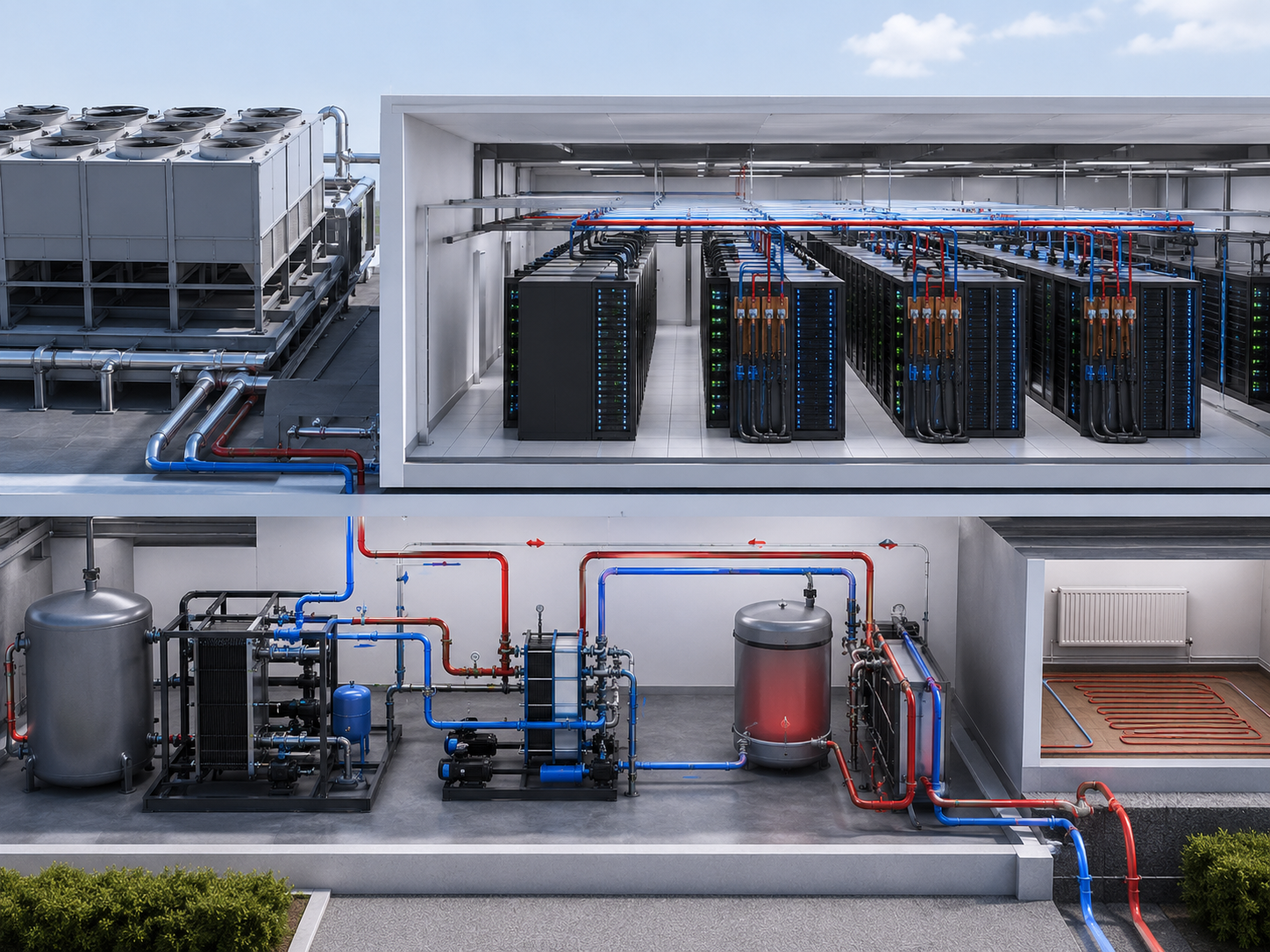
The industry pivot toward zero-water cooling resonates with both environmental necessity and the physical limits of traditional approaches. Air cooling reaches a thermal management ceiling of approximately 70 kW per rack, well below the power density required by the latest AI hardware. Liquid transfers heat roughly 24 times more efficiently than air, making water-free liquid cooling the best course of action for high-density AI workloads.

The best-in-class zero-water technologies now entering extensive deployment include the following:

  • Direct-to-Chip (DTC) Liquid Cooling

It involves cold plates mounted straight onto processors that remove heat at the source, leveraging sealed coolant loops, thereby completely eliminating the need for room-level air conditioning or evaporative water towers.

  • Single-Phase and Two-Phase Immersion Cooling

In the single-phase method, engineers submerge servers in non-conductive engineered fluids that capture heat without water consumption. Two-phase systems, in which fluid boils and recondenses in a closed vessel, offer higher heat-flux capacity and a lower 10-year total cost of ownership.

  • Closed-Loop Chip-Level Cooling

Microsoft began incorporating sealed chip-level cooling systems into all of its new data center designs in August 2024, saving over 125 million liters of water per facility per year.

  • Rear-Door Heat Exchangers (RDHx)

This system uses heat exchangers mounted on the rear doors of server racks that absorb heat before it can enter the room, reducing or eliminating reliance on air-side cooling systems.

As of 2024, liquid-based cooling systems accounted for 46% of the overall data center cooling market, with the global data center cooling market valued at $10.8 billion in 2025 and forecasted to reach $25 billion by 2031.

Designing Water Out of the Waste System: Closed-Loop Circularity

Zero-water cooling and closed-loop circularity are complementary tactics that cater to diverse design objectives. The former eliminates evaporative consumption, while the latter addresses the full lifecycle of thermal energy in a facility, essentially converting waste heat from cooling systems into a recoverable resource.

In closed-loop designs, coolant or working fluid circulates nonstop within sealed piping networks, capturing heat from servers and transferring it to dry coolers, heat recovery units, or district heating connections, with no water loss or atmospheric exposure. Microsoft’s closed-loop architecture, once filled at the time of construction, works indefinitely without needing extra water input. The technology giant reduced its Water Usage Effectiveness (WUE) from 0.49 liters per kWh in 2021 to 0.30 liters per kWh by 2024, with zero-water designs targeting WUE approaching zero.

Closed-loop systems also facilitate heat recovery integration with adjacent building systems, district networks, and on-site energy programs. They help transform what was previously a wasted thermal byproduct into a net-positive energy resource for neighboring infrastructure.

Next-Gen MEP Engineering for Zero-Water and Closed-Loop Systems’ Viability

Deploying zero-water cooling and closed-loop circularity in high-density AI data centers is inherently an MEP engineering challenge. Every single discipline within MEP ought to evolve to accommodate these systems, and the coordination among them should reach a higher standard than traditional commercial construction necessitates.

The critical MEP engineering responsibilities throughout this new design paradigm entail the following:

  • Mechanical and HVAC Engineering

MEP experts need to design and size closed-loop chilled water or coolant distribution systems, heat rejection infrastructure, dry cooler arrays, and precision temperature control strategies that sustain chip-level thermal tolerances in the absence of evaporative backup.

  • Plumbing and Fluid Systems Engineering

Chemical treatment protocols for closed-loop fluid integrity, redundant piping layouts with live leak detection, and supply and return headers sized for variable AI workload demands all require specialized plumbing engineering expertise from the preliminary design stage.

  • Electrical Systems Engineering

High-density power distribution supporting 80-150 kW per rack, alongside uninterruptible power systems and redundant electrical infrastructure, should be perfectly coordinated with cooling system power loads to meet facility-wide energy performance targets.

  • BIM Coordination and Clash Detection

In data center ceiling plenums where mechanical ductwork, electrical conduit, coolant piping, cable trays, and fire protection lines must coexist in a tightly constrained space, BIM-coordinated MEP design is imperative for constructability.

  • Sustainability and Energy Compliance

MEP professionals should incorporate WUE and PUE benchmarking, sustainability performance objectives, and energy code compliance into the design from the SD phase onward rather than treating them as post-design authentication tasks.

MEP Engineering Expertise to Match the Scale of the Challenge

The transition to zero-water cooling and closed-loop circularity in AI data centers is no longer a future-focused ambition. It is a workflow and regulatory expectation that takes shape across the US construction market right now. Architects, architectural firms, and general contractors engaged in data center projects need MEP partners who understand the end-to-end technical depth of what these systems require.

National MEP Engineers provides the MEP and sustainability design expertise that large-scale AI data center projects demand. Our licensed engineers deliver robust MEP system design throughout all project phases, from the SD phase through permit-ready construction documents, with sustainability-emphasized engineering built into each deliverable. For AEC teams designing next-gen US data center infrastructure, National MEP Engineers is the specialized partner that brings the in-depth technical expertise and delivery standards these projects need today.


Categories
MEP

What Makes an MEP Drawing Set ‘Permit-Ready’ And Why It Matters

When an MEP drawing set stalls at permit review, the cost is immediate: project delays, correction cycles, and missed occupancy deadlines. Yet many architectural firms and general contractors submit sets that are technically incomplete without realizing it.

A permit-ready MEP drawing set is not simply a polished schematic. It is a documentation package structured to satisfy regulatory scrutiny from the Authority Having Jurisdiction. In today’s construction environment, where AHJ requirements vary by region and code cycles update regularly, meeting that standard requires more than basic layouts.

AHJs now require drawings that show HVAC zoning, electrical service configurations, plumbing risers, equipment schedules, and code-referenced annotations. Accurate system coordination, complete technical specifications, and verified system integration are the baseline — not optional additions.

When permit reviewers detect inconsistent calculations or ambiguous layouts, they call for corrections. The consequence is that projects get delayed. This makes architects and general contractors rely on MEP drawing prowess to meet occupancy deadlines and avoid rework.

This article will outline the essential elements of a permit-ready MEP package and explain its importance in the current construction landscape.

What AHJs Actually Look for in an MEP Permit Submission

Approval-ready MEP drawing sets ought to demonstrate holistic compliance with regional building codes and national guidelines. AHJs use fundamental requirements to review submitted documentation. 

These requirements are grounded in three model codes: the International Building Code (IBC), which governs occupancy and structural requirements; the National Electrical Code (NFPA 70), which covers all electrical system design; and the International Mechanical Code (IMC), which governs HVAC, ventilation, and exhaust systems. Submitted MEP drawings serve as legal documents and must verify system safety, operational performance, and compliance with these standards at every stage of construction.

The Core Documentation Elements Every Permit-Ready Set Must Include

Permit-ready MEP drawings must include specific technical items that AHJs require for approval. These elements include:

  • Detailed equipment schedules with manufacturer specifications and performance ratings.
  • Complete load calculations confirming required system capacity and safety margins in accordance with ASHRAE 90.1 and the applicable IECC climate zone.
  • Thorough routing diagrams portray spatial coordination among all building systems.
  • Code compliance documentation referencing the adopted editions of the IBC, IMC, NFPA 70, and any state or municipal amendments.
  • Integration plans represent coordination with fire protection and life safety systems.

Together, these components give reviewing authorities everything they need to assess system adequacy and confirm code compliance during the permit evaluation.

The Regulatory Codes That Govern MEP Permit Approval in the U.S.

AHJ approval processes have evolved significantly, requiring compliance with multiple regulatory frameworks governing MEP design and installation.

The International Energy Conservation Code (IECC) directly governs HVAC equipment selection by setting minimum efficiency ratings, insulation values, and envelope performance thresholds that vary by climate zone. Where states have adopted their own energy codes, such as California Title 24, those take precedence over the base IECC, and MEP documentation must explicitly reference the adopted edition and any state amendments. 

The NFPA suite of codes governs the integration of fire protection systems across three primary standards: NFPA 13 for sprinkler system design and installation, NFPA 72 for fire alarm and signaling systems, and NFPA 101 (Life Safety Code) for occupancy-specific egress and life safety coordination. Each requires explicit cross-referencing in MEP documentation.

ASHRAE Standard 90.1 sets minimum energy-efficiency requirements for commercial building HVAC systems, lighting power density, and building-envelope performance. Most U.S. jurisdictions accept ASHRAE 90.1 compliance as an alternative path to IECC compliance for commercial projects.

What Permit-Ready Mechanical Drawings Must Demonstrate

Mechanical drawings must demonstrate complete system integration and verified performance to satisfy permit requirements. HVAC load calculations must confirm equipment sizing based on envelope performance, building occupancy, and operational requirements, and must comply with ASHRAE Standard 90.1 efficiency thresholds for the relevant IECC climate zone. When mechanical ventilation rates are involved, calculations must also meet the ASHRAE Standard 62.1 minimums for the applicable occupancy classification.

Ductwork layouts must show routing, sizing, and connection details for every zone, with sufficient clearances documented for maintenance access. Ventilation rates must meet the minimums established by ASHRAE Standard 62.1 for each occupancy classification present in the building, with outdoor air quantities and exhaust rates documented in accordance with the IMC. 

Electrical Drawing Requirements for NEC Compliance and Permit Approval

Electrical drawings for permit submission must demonstrate full compliance with NFPA 70 (National Electrical Code), covering power distribution, safety system integration, and emergency power provisions.

  • Power distribution diagrams must show service entrance configurations and panel schedules in sufficient detail for reviewers to verify load capacity and circuit protection.
  • Branch circuit layouts must include overcurrent-protection sizing and grounding-system details that comply with NEC requirements.
  • Photometric calculations must accompany lighting layouts to demonstrate that illumination levels and lighting power density meet the minimums set by ASHRAE 90.1 and the applicable occupancy requirements under NFPA 101.
  • Emergency power integration must document backup energy capacity and automatic transfer switching configurations in compliance with NFPA 110, and must show coordination between the normal and emergency distribution panels.
  • Fire alarm and telecommunications drawings must be coordinated with all other building systems to confirm spatial compatibility and signal integrity.

Together, these components confirm that electrical systems meet NFPA 70 requirements for the relevant occupancy type, with fire alarm systems additionally referencing NFPA 72 and emergency power systems referencing NFPA 110.

What the Documentation Must Cover for Plumbing and Fire Protection

Plumbing documentation must include water supply calculations that verify adequate pressure and flow rates for all fixtures, drainage system layouts with correct sizing and slope, and fixture schedules confirming compliance with the International Plumbing Code (IPC),  or the Uniform Plumbing Code (UPC) in Western U.S. jurisdictions, and applicable water conservation requirements.

Waste and vent systems should also be in good working order. They require accurate isometric drawings that show appropriate sizing and slope requirements. Another vital aspect of this provision is that fire protection systems demand perfect coordination with structural and architectural components. This is to ensure ideal coverage and accessibility for maintenance operations.

Sprinkler layouts must show head spacing, water supply capacity, and connection to the alarm system in accordance with NFPA 13. Hydraulic calculations must verify system performance for the relevant occupancy classification as defined by NFPA 13, and accessibility documentation must meet NFPA 25 maintenance requirements.

Quality Control Checks That Prevent Permit Rejections

Complete quality control means ensuring permit-ready drawing precision and regulatory adherence. It involves:

  • Interdisciplinary coordination review: Each MEP discipline is checked against the others to confirm that systems do not conflict spatially or operationally, and that all code requirements are met across the full set.
  • Calculation verification: Load calculations, equipment sizing, and performance specifications are independently checked to confirm they support the design intent and meet code minimums.
  • Drawing accuracy check: Dimensions, annotations, and specifications are reviewed for internal consistency across all sheets to catch discrepancies before they reach the reviewer.
  • Code compliance audit: Each drawing is checked against the adopted editions of the IBC, IMC, NFPA 70, IPC or UPC, NFPA 13, and ASHRAE 90.1, including any state or municipal amendments that modify the base code requirements for the project jurisdiction.
  • Constructability review: Installation sequences and site feasibility are assessed to confirm that the design as drawn can be built without conflicts or coordination issues in the field.

These procedures are of great value. They can shorten permit review cycles and aid efficient approval procedures that uphold project schedules.

How BIM and Cloud Platforms Support MEP Drawing Accuracy

BIM platforms have become central to producing accurate, permit-ready MEP documentation. 3D coordination within these platforms identifies system conflicts before they appear in submitted drawings, and integrates directly with calculation software and automated drawing generation tools to maintain consistency across all disciplines.

Cloud-based collaboration platforms enable live coordination among design teams, reviewers, and project stakeholders throughout the documentation process. Together, these tools support faster review cycles and more reliable approval outcomes. Version control systems ensure every stakeholder is working from the current drawing set, reducing the on-site conflicts and change orders that arise from outdated documentation.

Energy Modeling and Sustainability Requirements in MEP Permit Sets

Energy modeling is now a standard requirement in MEP permit submissions across most U.S. jurisdictions. Calculations must validate HVAC system efficiency and building envelope performance against the thresholds set by the adopted IECC edition, or demonstrate equivalent compliance through ASHRAE Standard 90.1. Where renewable energy systems are included, their integration must also be documented in accordance with the applicable state energy code.

Sustainable design documentation must address water-conservation measures, indoor-environmental-quality provisions, and energy-efficient system selections. For projects pursuing green building certification, these elements must align with the relevant LEED credit requirements or the applicable jurisdiction’s green building code, many of which reference ASHRAE Standard 189.1 for high-performance building criteria.

Conclusion

Permit-ready MEP documentation is the foundation for project timelines, budget certainty, and regulatory approval. In a landscape where AHJ requirements grow more detailed with each code cycle, the quality of the drawing set determines whether a project moves forward or stalls.

National MEP Engineers produces MEP drawing sets built to meet AHJ requirements across U.S. jurisdictions. Our documentation process covers load calculations, equipment schedules, coordination drawings, and code compliance references, everything a permit reviewer needs to approve the submission without a correction cycle.

If your next project requires permit-ready MEP drawings that hold up under AHJ scrutiny, get in touch with National MEP Engineers to discuss your requirements.

Categories
MEP

The Hidden Triggers Behind MEP Redlines & How Early Planning Prevents Them

Every architect and general contractor is aware of the sinking feeling of receiving a redlined package. Red marks throughout MEP drawings mean rework, delays, and budget exposure that no one planned for. What most teams miss, though, is that MEP redlines can sometimes result from careless mistakes. They originate from specific, repeatable triggers that infiltrate during the earliest design phases.

Research confirms that rework expenses generally account for between 5% and 8% of overall project costs. For a moment, consider only MEP systems: they alone consume 30% to 40% of total commercial construction expenditures. This combination makes every unaddressed MEP conflict a costly problem.

Therefore, understanding in detail what really causes MEP redlines and fixing those causes before they multiply is among the highest-leverage decisions that architects and GCs can make in any project.

The Main Cause Most Teams Never See Coming

The hard truth is that most MEP redlines do not result from field errors. In the real world, they emerge in design-phase decisions that seem nonthreatening at the time.

Architectural layouts are often settled before MEP experts provide meaningful input. This sequencing is precisely where trouble begins. When architects finalize ceiling heights and shaft dimensions before sizing HVAC ductwork, conflicts become unavoidable. If electrical room locations are decided in the absence of load summary input, panel clearance breaches follow.

The project experience coordination issue is compounded by the fact that MEP systems are deeply interdependent. For instance, due to their size and rigidity, ductwork cannot be rerouted in a day when a structural beam is blocking it. Moreover, a plumbing stack placed incorrectly can affect fire protection riser locations above it.

GCs and architects need to comprehend that every unidentified conflict in design accumulates into multiple redlines later. Industry surveys show that 10-15% of total project expenses can go toward rework, with MEP systems hit hardest. Fortunately, these are predictable triggers, and when identified early, they can change the whole course of the outcome.

The Most Consistent Hidden Triggers Behind MEP Redlines

Keep in mind that not all MEP redlines are created equal. Some come from ethical process gaps that keep surfacing project after project. Understanding these recurring triggers helps GCs and architects actively safeguard schedules and budgets. These are the covert triggers that initiate MEP redlines most consistently in all US construction projects:

  • Late MEP involvement locks shaft dimensions and ceiling heights before HVAC and plumbing systems are sized
  • Missing interdisciplinary coordination between MEP routing and structural shop drawings generates on-site conflicts at beams and slabs
  • Undocumented scope alterations mid-design push MEP systems into configurations that do not align with structural or architectural elements anymore
  • Insufficient space allocation in ceiling plenums and mechanical rooms requires on-site rerouting and expensive access cuts
  • Changing code requirements during multi-year projects lead to compliance bottlenecks when MEP designs are not updated accordingly
  • Incomplete electrical load summaries make panel schedules disconnected from real equipment demands, resulting in correction cycles

Every single one of these triggers is avoidable. Recognizing these triggers before design development is complete enables architects and GCs to eliminate the redline cycles that result. Proactive detection at the SD phase costs only a fraction of what field correction demands.

Why Timing Is Everything in Avoiding Redlines

Among the most crucial things that GCs and architects can internalize is the dramatic increase in the cost of fixing an MEP conflict as a project progresses.

An HVAC routing conflict spotted in SD takes a significant amount of time to resolve. If the same conflict is discovered during CD, it can be dealt with in just a couple of days. When the conflict is detected at the site, it can completely halt the entire trade sequence. So, proactive MEP coordination, commencing at the SD phase, consistently yields better outcomes.

On the other hand, MEP experts’ engagement during the SD phase greatly influences ceiling height choices, shaft sizing, and equipment room locations before finalizing them. This early-stage input effectively eliminates the source conditions that produce redlines.

Contractors leveraging coordinated BIM models prior to construction report about 40% fewer RFIs during installation. Clashes detected and fixed at the design phase have signified an ROI of 10 to 1 on documented projects.

Establishing weekly MEP coordination touchpoints during DD allows architects to experience quantifiably cleaner permit submissions. From the perspective of general contractors, fewer RFIs indicate minimal schedule disruptions and lower administrative overhead per project.

How Early Planning Methodically Removes MEP Redlines

There was a time when people considered early planning a vague concept. Over time, it has become evident that it is, in fact, a methodical set of decisions and workflows that GCs and architects can incorporate into every project. The goal here is to make conflicts easily visible while solutions remain within an affordable range.

The following are the particular early planning initiatives that most efficiently stop MEPO redlines from forming:

  • Involve MEP specialists at SD so they can influence shaft locations, ceiling heights, and equipment room sizing from the beginning
  • Conduct interdisciplinary BIM coordination using Revit and Navisworks clash detection prior to issuing CD sets
  • Set up a BIM execution plan at the start of the project that outlines routing hierarchies, exchange formats, and clash resolution procedures
  • Validate ceiling plenum depths against the actual HVAC duct sizing, sprinkler mains, conduit bundles, and insulation build-ups concurrently
  • Execute organized coordination meetings at the conclusion of every design stage to confirm all traders’ optimal working conditions from the same model

All these steps move critical decisions to the stage where they cost the least to modify. GCs and architects who prioritize embedding these steps into their standard project operations consistently deliver clearer CD packages with minimal permit corrections.

Clearly, front-loading coordination investment is the best direct approach to protect both project margins and client relationships.

Final Notes

The preceding discussion evidences that MEP redlines do not have to be inevitable. They are basically the predictable outcome of coordination shortcomings that form early and emerge late. Architects and GCs with a detailed understanding of the hidden triggers behind MEP redlines can stop them before they compound across a project.

Early MEP involvement, methodical clash detection, and disciplined coordination at the SD and DD phases should be initiated first. They help remove the conditions that produce redlines. Always remember that every dollar spent on preemptive coordination can save thousands of dollars in downstream rework expenses.

To avail exactly this kind of proactive, early-stage MEP coordination service, National MEP Engineers is among the most prominent choices. Once partnered with architects and general contractors, we ensure your project stays out of MEP redlines by effectively fixing hidden triggers at the very start.

Our MEP and fire protection services are formulated around PE-led, coordinated documentation that precisely mitigates the hidden triggers behind MEP redlines before they become major obstacles in the field. Connect with National MEP Engineers today and make MEP redlines a struggle your upcoming projects will never face.

Categories
MEP

What Architects Should Expect from a High-Performing MEP Partner

Architects and general contractors are aware that a wrong MEP partner can subtly disrupt even the strongest design. Minor coordination gaps in HVAC, power, or plumbing result in RFIs and change orders.

However, with a high-performing MEP partner, architectural teams move from concept to permit with minimal surprises and far less stress. Honestly, this difference matters even more now, as clients lobby for expedited schedules and stricter energy and safety performance.

From the very beginning, architectural firms need a clear picture of what good MEP engineering design looks like. In this blog, we will lay out practical expectations for a high-performing MEP partner, rooted in existing best practices, BIM coordination research, and recent project metrics.

The focus here is simple: help decision-makers of US-based AEC businesses identify the workflows, traits, and technical depth that realistically safeguard their projects.

The Importance of Having the Right MEP Partner for Architects

The efficiency of modern buildings depends more on MEP systems than on their structure or finishes. MEP partners capable of delivering high performance treat these systems as the foundation of safety, overall performance, and long-term operational expenses. They step into the schematic design phase with specific load assumptions, energy goals, and code pathways. There is no room to wait for late design handoffs. Because of this early engagement, layouts remain realistic, and mechanical rooms or shafts are not considered an afterthought.

In fact, recent coordination studies reveal how much this matters. Rework stemming from design conflicts can be significantly curtailed if BIM-based clash detection is leveraged. In fact, a large share of general contractors across the US now report that proactively prioritizing early BIM coordination resolves clashes well before construction work starts. They have also experienced a considerable reduction in RFI and change order volumes.

So, architects or architectural firms should expect their MEP partners to lean into this reality and not perceive coordination as merely a box-ticking practice at the end.

Main Technical Capabilities Architects Must Insist On

There is much more than just drafting capacity that high-performing MEP partners bring to the table. Modern architects need to see direct, licensed engineering leadership on each project, supported by an organized quality control procedure.

US-based PEs specify system criteria, review calculations, and sign off on permit packages. Then, production teams convert that direction into coordinated construction documentation within a common BIM environment.

Considering the mechanical side, architects should expect in-depth HVAC load calculations, meticulous equipment positioning, and cautious routing that respects ceiling heights and architectural intent.

On the electrical side, the right MEP partner should be able to offer clear power distribution, emergency systems, lighting layouts, and panel schedules. They must also ensure that these elements are always in alignment with the NEC and regional codes.

On the plumbing and fire-protection front, partners are required to deliver code-conforming water, gas, and sprinkler systems in integration with architectural and structural limitations.

One final capability that architects expect from their ideal MEP partner is the energy modeling and Title 24 or IECC documentation to support design choices. Architects don’t want their MEP partner to consider these documentary norms to be an afterthought when permit deadlines are near.

Collaboration Behaviors That Safeguard Design Intent

Technical proficiency won’t matter much if the MEP partners can’t work the way architects do. This implies that design teams need to seek partners who organize their operations around SD, DD, and CD milestones, with unambiguous expectations at every stage.

Strong partners engage early during the concept conversations. They translate program requirements into system strategies and flag any limitations before drawings are finalized. They take advantage of BIM not just as a modeling tool but as the primary coordination workspace across disciplines.

Let’s not forget that communication is equally important. Another critical expectation of modern architects is a single, accountable point of contact who can address design questions ASAP and keep discussions moving. High-performing teams respond to RFIs with specific, coordinated answers that reference the most updated models. They also record decisions so that on-site teams always know which version is current.

Evidently, these habits keep confusion to a minimum and help preserve design intent under strict schedules.

BIM and Coordination Practices Architects Must Seek

Right now, architectural firms are at a critical juncture, recognizing that there is no alternative to BIM coordination. Nevertheless, architects should still closely examine how an MEP partner really runs that process.

The best firms treat BIM as the focal point for multidisciplinary decision-making rather than a deliverable manufactured in isolation.

Architectural firms must opt for MEP partners who:

  • Coordinate every discipline together within a single Revit or similar BIM model rather than in separate silos.
  • Run clash-detection cycles and track resolutions regularly.
  • Utilize coordinated models to preserve space for piping, ducts, and risers so trades don’t fight for ceiling space later.
  • Join BIM workflows to fabrication or prefabrication where feasible. This supports GCs in compressing timelines without compromising quality.
  • Share models and viewpoints with architects so everyone can see coordination choices in context.

In this regard, it is worth mentioning that project-level studies now confirm that disciplined BIM coordination can notably lower RFIs and change orders. Your MEP partner must build those coordination practices into its standard delivery model.

Signs of an Actual High-Performing MEP Partner

As a matter of fact, architectural firms look for signals that ensure a potential MEP partner is capable of performing optimally under pressure. Some of these signals emerge in proposals and kick-off conversations. The rest of them appear at the early stages of design. It is crucial to understand that both matter when projects are moving quickly.

The most important sign involves:

  • Clear expectations regarding how the partner will assist with SD, DD, CD, and construction support.
  • Proof of multi-state code familiarity, such as IBC, IMC, IPC, IFC, NEC, ASHRAE, NFPA, and Title 24 where relevant.
  • Proven use of BIM-based coordination and documented quality control procedures that lessen redesign.
  • Metrics that highlight fewer RFIs, minimal change orders, and expedited permitting on comparable work.
  • A pragmatic approach to sustainability that favors reliable, maintainable solutions over feature-driven yet fragile technologies.

It is also vital that architects listen to how MEP teams discuss collaboration. High-performing MEP support providers speak in the realm of shared accountability, timeline protection, and design intent. This attitude makes a huge difference by predicting how they will behave when inescapable pressure comes.

Final Notes

Let’s set something straight first. Architectural forms don’t just need MEP drawings. They actually want an MEP partner who can help them deliver efficient, safe, and buildable projects with no continuous firefighting.

High-performing MEP teams feature licensed engineering leadership, best-in-class BIM coordination, and workflows aligned with architectural milestones.

National MEP Engineers positions itself as a remote, expert-level provider of MEP design services. Our MEP solutions are built around precisely the expectations discussed above for architects and architectural firms throughout the US.

If your architectural firm is looking for a high-performing MEP partner, there is none better than the National MEP Engineers. Contact us now!

Categories
MEP

How Architects and MEP Engineers Can Protect Design Intent Through Construction

Design intent is something that has to be strong on paper and through to the construction completion. However, it often starts strong but fades after construction has started on a busy site. In a way, design intent can seem fragile.

Substituting materials, making on-site adjustments, and hurried coordination can rapidly erode meticulously crafted concepts if teams don’t have the needed structure and support. Architects put enormous effort into coordinated design documents. Still, contractor RFIs and value engineering silently damage that vision. Understanding the reasons behind this is the first proactive step toward preventing it.

Where Design Intent Is Most at Risk During Construction

You would make a big mistake if you think design intent is limited to visual appearance. In fact, it also describes the aesthetic and functional goals reflected in drawings, specifications, and models.

Evidently, when there is a mismatch between design and construction, gaps naturally emerge quickly. We know that architects finalize documents and then deliver them to the contractors. This handoff is when any design drift occurs. Contractors substitute materials, reroute MEP systems, and relocate equipment without sharing this information with the design team.

MEP systems directly orchestrate many of these conflicts. The positioning of HVAC equipment affects ceiling heights and spatial quality. Electrical conduit routing disrupts the interior finish plan. Even plumbing chases compete directly with architectural partition layouts. It is critical to acknowledge that these trade-level decisions call for active coordination and not passive document review.

Architects and general contractors in the US must recognize a consistent pattern. We see RFIs compound in the absence of early integration of MEP systems. What follows are the change orders. Such disruptions extend a project’s budget and schedule. That is why early MEP coordination is the most effective first step to defend design intent.

MEP Coordination as the First Line of Defense

If you want to reliably protect your architectural vision, there is no better alternative than coordinating MEP systems early. Real-life examples repeatedly confirm that when MEP engineers start collaborating at the schematic design phase, spatial conflicts get fixed before becoming major issues in the field. Accordingly, ceiling heights stay intact, and equipment rooms remain fitted in planned zones.

On the other hand, BIM-based coordination is crucial because it provides architects and contractors with a common visual model. Clash detection with Navisworks or Revit spots system conflicts before construction work starts. This preemptive approach removes costly on-site modifications that mostly compromise project budgets and design quality.

Therefore, GCs and architects should implement the following main MEP coordination practices into every project workflow:

  • MEP specialists have to engage with the design team at the SD phase. This confirms system placements ahead of finalizing and locking in architectural layouts.
  • Clash detection reports should have every construction document submission, including all resolved and open MEP conflicts across disciplines.
  • Clear rules should be established for substitutions, reviews, and sanctions so that field modifications respect appearance, performance, and code obligations.
  • Weekly coordination meetings must have MEP, structural, and architectural teams addressing open EFIs collaboratively before on-site installation work.

When it comes to complex projects, most firms now depend on specialized MEP design partners. The main advantage is that while the partner runs clash detection, updates models, and responds quickly to RFIs, your architects and GCs remain focused on stakeholder alignment and site progress.

Documentation Precision to Safeguard Design Decisions

Remember that construction documents are the legal and technical record of design intent. Inadequately coordinated drawing packages leave contractors confused and lead to unauthorized field substitutions. This means architects need MEP drawings that align perfectly with architectural and structural layouts at all project phases.

Ready-for-permit MEP drawings necessitate comprehensive coordination prior to AHJ submission. Duct routing plans, equipment schedules, panel schedules, and riser diagrams should always resonate with the final architectural configuration. When documentation is incomplete, it results in permit comments that significantly delay project timelines.

Documentation of the mechanical rooms mandates top-level precision. Fully coordinated drawings should accommodate HVAC clearance zones, structural support specifications, and equipment access routes. Frequently, architects lose ceiling height when mechanical layouts remain unsettled through design development. GCs are prone to costly change orders when contractors encounter undocumented field conflicts.

Energy Compliance & Fire Protection as Design Anchors

Energy compliance and fire protection systems are crucial factors that carry particular design implications for architects. IECC specifications regulate HVAC system choice, lighting power density, and building envelope performance. These code norms directly impact spatial planning, ceiling design, and equipment positioning decisions during the entire course of a project.

As a matter of fact, fire protection systems are subject to equally significant coordination demands. Sprinkler head placement is a vital aspect that affects ceiling aesthetics. Besides, riser locations compete with the positioning of architectural shafts. Be mindful that both systems need code-motivated design decisions validated long before starting CD production.

It is the responsibility of the architects and GCs to answer these compliance-focused design questions before CD production initiates:

  • The chosen HVAC system must be consistent with IECC energy performance requirements to confirm the equipment efficiency rating during the DD phase.
  • Fire sprinkler head locations ought to coordinate directly with reflected ceiling plans. This protects all architectural finishes and interior design intent.
  • Lighting power density calculations need to uphold applicable energy code thresholds without sacrificing the architectural lighting scheme in all occupied spaces.

Sustaining Design Intent Using Active Construction Phase Support

Bear in mind that protecting design intent does not end when permit approval is gained. During the construction phase, MEP support ensures that the architectural vision remains consistent as contractors mobilize and install systems. Dedicated MEP support teams actively monitor site conditions and fix RFIs with design-friendly solutions.

Undoubtedly, submittal reviews are a critical milestone in the construction phase. Contractors often propose equipment alternatives during submittals that can feasibly downgrade system performance and spatial quality. So, MEP experts should assess every alternative against the original design criteria. When incompatible substitutions are approved, the outcome is long-standing performance issues that outlast project warranties.

Dedicated MEP support should also be able to swiftly respond to RFIs with documented, coordinated solutions. An unaddressed RFI contributes to contractor ambiguity, which then leads to field decisions that almost never match design intent. Therefore, prompt RFI responses are the shield for your construction schedule while ensuring architectural precision throughout the system installation period.

Conclusion

We can now confidently say that design intent survives construction when documentation, coordination, and compliance all work jointly. Architects and GCs who prioritize early MEP alignment can easily protect their project’s design intent throughout every phase. The needed discipline begins at schematic design and flows through final commissioning and occupancy.

National MEP Engineers is the MEP partner that architects and GCs across the US need. We deliver top-quality, cutting-edge MEP engineering support that no one else does. Our entire MEP services package integrates seamlessly into your workflow.

Connect with us and start protecting your design intent with sheer precision today.

Categories
MEP

Prevent ‘Cascading Changes’ in Commercial Projects Through Better MEP Planning

Have you ever seen one design choice unravel an entire commercial infrastructure project? In reality, that actually happens more than general contractors and architects realize. More often, the root cause of these failures is gaps in MEP coordination. Even a single unfixed MEP conflict can trigger cascading changes in multiple project operations. More interestingly, once that chain reaction begins, firms pay the price in terms of time and budget overruns.

Well, the good news here is that most cascading changes are completely preventable. GCs and architects who engage with MEP experts early evidently face minimal revisions. In this blog, we will walk you through how optimized MEP planning safeguards commercial projects from scope drift. It will also show the vital coordination gaps to resolve before they sink into bigger problems.

Impact of Cascading Changes in Derailing Commercial Projects

GCs and architects are well aware of how rapidly one design change can multiply. There are several real-life examples. Like an HVAC duct repositioning in last-minute construction documents can shift supply routing. This change collides with structural steel overhead. After that, ceiling heights need to be adjusted, and the lighting layouts need to be broken. Accordingly, electrical circuits require complete rerouting to match. It is truly surprising how one late decision can easily become five or six change orders.

This sequence repeats across all scales of US commercial projects far too often. Research shows that miscommunication accounts for 26% of all construction rework, and inaccurate project information drives another 14-22% of total rework expenses. Architects and contractors have to carry those expenses directly in every project stage. Weak MEP coordination makes it even more difficult to avoid these figures in commercial developments.

On the other hand, RFI holdups alone can defer a project’s completion schedule by up to 10%. Remember that each unsettled MEP clash on site comes with its own cascading timeline risk. In large-scale commercial projects, the routine generation of hundreds of MEP-related RFIs is common. As a matter of fact, early MEP coordination can break this chain prior to escalating costs and time.

Most Overlooked MEP Coordination Gaps by Architects & GCs

It is not that common for MEP conflicts to stay local. There comes a point when contractors and architects learn this eventually. A plumbing issue on one floor leads to a cascade two floors up. The majority of last-minute scope changes in commercial projects stem from coordination gaps between design and MEP engineering.

Unmistakably, involving MEP specialists early in the workflow addresses these gaps before they become major struggles. These coordination errors seldom result in cascading design changes in commercial projects:

  • Ceiling plenum limitations are missed early by HVAC design, and after that, duct reroutes damage the entire structural coordination.
  • Electrical panels contradict architectural components, and expensive layout changes follow in subsequent design phases.
  • Design teams position plumbing chases in the absence of cross-disciplinary input. Then, it becomes necessary to shift shaft locations in later phases.
  • Design development ignores fire protection riser locations, which then forces ceiling and lighting revisions during construction documentation.
  • Teams undersize mechanical equipment rooms during the schematic design stage. What we see next is trade sequencing conflicting when construction is underway.

General contractors should realize that they benefit most when MEP engineering input begins before the design hardens. It effectively curtails on-site conflicts, which are known to generate the most costly construction RFIs.

Why Mechanical & Electrical Engineering Should Come First

For architects working on commercial projects, HVAC systems demonstrate the most frequent cascade trigger. They know that ductwork routing depends directly on structural clearances, ceiling heights, and equipment room dimensions. In this scenario, mechanical experts need to assess these spatial constraints from the outset of the project. With no early input in place, architects lock in ceiling layouts without precise MEP space reservations.

Load calculations must also be completed at the schematic design stage. Equipment choice and appropriate sizing flow explicitly from those early numbers. Last-stage mechanical input indicates that spatial alignment occurs only after construction documentation is complete. Any HVAC reroute at that point negatively impacts the entire coordinated drawing package. Then, revisions compound throughout multiple disciplines at the same time.

Electrical engineering next introduces identical cascading risks when it enters the project too late. Here, keep in mind that panel sizing depends on aggregate loads from every building system. When electrical rooms are undersized, they enforce last-minute floor plan changes that cost architects several weeks. It is also worth noting that NEC-compliant conduit routing calls for structural clearance planning during design development. When you skip this, it contributes to on-site conflicts and high-cost RFIs during electrical rough-in.

Plumbing & Fire Protection Systems That Amplify Scope Changes

Throughout the US, architects and general contractors often undervalue the cascading potential of plumbing and fire protection systems. Plumbing design should include chase locations, drainage grades, and water risers from the earliest stages. Bear in mind that fire protection coordination ought to take place before ceiling and lighting layouts are finalized.

The following coordination failures are mostly responsible for triggering downstream scope changes in commercial projects:

  • Sanitary drainage grades need specific slab thickness, and late coordination makes structural redesign and floor plan revisions compulsory.
  • Hot-water recirculation loops require individual chase spaces, and shaft clashes occur once architects have finalized layouts.
  • Gas piping layouts must be coordinated very early in the process with equipment locations and structural penetration points.
  • Fire sprinkler zoning and riser locations need to be coordinated with ceiling, lighting, and HVAC systems from the start of design development.
  • Last-minute fire protection input makes ceiling revisions mandatory, impacting multiple disciplines and trades concurrently.

General contractors should be mindful of the actual cost of these gaps during rough-in and closeout. When early plumbing and fire protection coordination are prioritized, we see the prevention of most of these expensive late-stage scope changes.

Unified MEP Planning as a Project Risk Strategy

As an architect or GC, if you are committed to integrated MEP planning from day one, you can rest assured of stronger outcomes. This underscores the importance of involving MEP and fire protection experts from schematic design onward. Early coordination essentially establishes system-wide strategies and design protocols across disciplines. Architectural decisions remain unsettled before MEP input can properly shape them.

BIM-based coordination in Revit fosters cross-disciplinary clash detection before the first brick is laid on site. Research confirms that coordinated MEP BIM workflows significantly reduce errors and rework. For contractors, this means fewer RFIs and minimal change orders throughout the project. It also indicates greater schedule certainty at each major project checkpoint.

Architects benefit considerably when MEP input comes at the SD instead of the DD phase. When this input is prioritized during the SD phase, it helps prevent ceiling-height clashes, incorrect shaft sizing, and permit surprises. On top of that, it also guarantees the elimination of expensive design drift that often frustrates GCs and architects across all project phases.

Conclusion

Cascading changes don’t have to define project delivery of commercial developments. Architectural firms and general contractors dedicated to avoiding scope drift share a common practice. It is nothing other than early MEP coordination. Involving MEP experts from the start of the SD process ensures that every discipline is ideally aligned. It safeguards schedules, budgets, and permitting timeframes on every commercial project.

Under such circumstances, National MEP Engineers is the best partner you can have in the US. We deliver unified MEP support to GCs and architectural firms. Our licensed PEs cover MEP and fire protection from SD to permit-ready CDs. We leverage a three-layer QC process to minimize permitting friction and revision cycles on all projects.

So, for your next commercial project, partner with National MEP Engineers and experience guaranteed prevention of cascading changes through top-drawer MEP planning.

Categories
MEP

The MEP Decisions That Shape Building Layouts Long Before CDs Are Developed

There is a pattern that most general contractors and architects are familiar with. A layout gets locked in, then the MEP expert arrives, and everything changes. Consequently, equipment rooms end up in the wrong zones, ceiling heights shrink, and structural beams block duct runs. It is not that these clashes originate during the construction documentation. Instead, they surface from MEP decisions that were not made early enough. The real challenge is to get ahead of this cycle.

MEP systems influence spatial choices throughout the schematic design phase. Mechanical rooms, plumbing shafts, electrical risers, and fire protection zones all require spatial commitments before construction documentation begins. Every architect and GC in the US needs to recognize this dynamic, as it protects their budgets, schedules, and design quality from the very start.

Location of the Mechanical Room Drives Every Floor Plan Decision

During the conceptual design phase, MEP experts utilize simplified spatial models to allocate free space. This assures sufficient room for mechanical equipment, ceiling voids, and risers. Architects need these allocations verified before floor plans can advance past the schematic design.

According to research, HVAC and associated mechanical systems can take up to 30% of an infrastructure’s enclosed volume. Design teams customarily designate a minimum 3-foot ceiling plenum to accommodate MEP requirements. When this plenum is cut while performing value engineering, duct runs conflict with ceiling finishes and structural beams. An actual eight-story building of specific height can gain an additional floor when MEP coordination halves the plenum requirement.

SMACNA norms govern duct sizing, routing, and pressure classifications for every HVAC distribution system. Upholding these norms calls for structural clearances validated at the schematic design phase. When architects defer mechanical room placement, structural conflicts become unavoidable, which then generate expensive change orders in the design development phase.

Electrical Infrastructure That Finalizes Spatial Choices at the SD Phase

At the SD stage, electrical infrastructure seldom impacts the layout more than architects realize. One must be mindful of the main switchgear rooms and distribution panel locations requiring NEC-mandated clearances. These sanctions specify the room dimensions that resist revision after architectural layouts are finalized. No one wants to relocate a switchgear room once structural drawings have been issued.

It is the responsibility of the GCs and architects to address the following electrical spatial commitments at the earliest in the SD phase:

  • Main service entrance and switchgear room positioning should be in alignment with the requirements of the utility provider. This alignment must be ensured before locking in floor plan layouts at the SD phase.
  • Electrical riser shaft locations must be coordinated with structural bay spacing to avoid penetration conflicts.
  • Exhaust routing and the placement of the emergency generator need roof or grade-level space decisions, directly impacting both façade design and field planning.

So, clearly, the placement of the electrical room must be confirmed early. This ensures perfect alignment between architectural and structural decisions. It further evades any layout changes, which often disrupt permit schedules and amplify contractor bid pricing.

Plumbing Shafts That Directly Affect Structural Framing

Plumbing routing is another early-stage spatial commitment that architects must deal with at schematic design. Keep in mind that vent stacks, sanitary waste lines, and domestic water risers require exclusive shaft space, which must be validated prior to finalizing framing decisions. These shafts pierce structural members and call for coordination before structural specialists settle bay layouts and beam depths.

Wet wall positioning establishes partition layouts throughout the entire floor plates. When a plumbing core is positioned without structural input, firms experience cascading partition conflicts. General contractors encounter these misalignments as on-site change orders when plumbing shafts are installed in undocumented locations during construction.

When it comes to vertical distribution in multistory buildings, careful plumbing coordination is the key. Understanding that tight floor-to-floor spacing severely restricts MEP routing is also vital. This means plumbing risers ought to align with fixture layouts and fulfill venting and pressure requirements defined during the SD phase.

The Need for Fire Protection Zoning and Ceiling Coordination

The designs of fire protection systems matter a lot. They have a significant influence on both occupancy planning and ceiling coordination. Moreover, sprinkler head placement relies on occupancy classification, confirmed ceiling heights, and hazard group. Don’t forget that the AHJ review should commence at permit submission. Architects require confirmed occupancy classifications ahead of finalizing sprinkler density calculations. If you get this sequencing wrong, be ready for complete redesigns at the permit stage.

The following fire protection-related decisions need to be made by GCs and architects before SD concludes:

  • Confirming occupancy classification should precede sprinkler density calculations to stay clear of permit-stage redesigns.
  • Riser room and fire pump locations need to be integrated with architectural core planning to eliminate last-minute shaft relocations.
  • Ceiling height commitments for all occupancy zones should be in line with sprinkler head spacing requirements before reflected ceiling plans reach the design development stage.

Successfully dealing with the fire protection zoning at the SD phase safeguards permit timelines and removes cascading conflicts between architects, fire engineers, and structural teams during design development.

Energy Compliance & Its Impact on Early MEP System Selection

Complying with energy codes belongs in the SD-phase discussion, not during the CD review cycle. We know that IECC protocols govern HVAC system decisions, envelope performance, and lighting power density jointly. These specifications directly motivate how mechanical and electrical systems are sized, routed, and positioned across a building. Architects who give preference to addressing energy compliance early make smarter spatial decisions throughout every design phase.

On the other hand, building envelope choices made at the SD phase have a considerable impact on HVAC load calculations. Window-to-wall ratios, glazing specifications, and insulation methods change how mechanical systems are sized and where equipment finally lands.

When HVAC duct layouts are integrated within BIM models, they help curtail coordination clashes with other trades by approximately 20%. Such a notable reduction occurs only when energy-driven system choices are made sufficiently early to inform architectural layout decisions.

Final Thoughts

It is undeniable that MEP decisions taken during schematic design influence every single building layout that follows. So, those GCs and architects who prioritize addressing MEP requirements early can confidently protect their project timelines and design integrity throughout the entire project lifecycle.

National MEP Engineers brings top-quality MEP, fire protection, and energy compliance expertise into your SD process. Our proficient team integrates MEP spatial planning into your architectural workflow from the earliest design stage, led by licensed PEs.

Get in touch with National MEP Engineers now and start making foundational MEP decisions that secure your project layout from the very first day.

Categories
MEP

The MEP Risks Behind Fast-Track Commercial Construction Projects and Their Solutions

Are you aware of the MEP risks associated with fast-track commercial construction projects? Well, as an architect or general contractor working in the US, irrespective of your experience in this field, you should have a detailed understanding of these risks and, of course, how to effectively mitigate them.

Fast-track commercial developments tighten design and construction tasks into parallel schedules. Under these circumstances, GCs and architects face relentless timeline pressure. That pressure drives MEP system choices before design variables are completely addressed. Then, MEP systems get locked into inadequately coordinated layouts. The consequences are expensive rework, permit rejections, and on-site conflicts. They hit architects and GCs at the worst possible moment.

It is crucial to recognize that MEP risks rarely emerge at early design reviews. They build quietly through deferred decisions, incomplete coordination, and misaligned drawings. Architectural firms need to identify these risks well in advance. So, grasping the particular MEP vulnerabilities that expedited schedules create is the first step toward addressing them successfully.

Fast-Track Commercial Projects & Rising MEP Risks

There is something very interesting about fast-tracking construction projects, which is even more relevant when it comes to commercial projects. It forces design and construction phases to advance simultaneously. This approach shortens project timeframes but has serious consequences for MEP engineering. GCs and architects mostly lock in structural and civil choices before MEP systems are completely developed. That sequencing causes coordination conflicts across all MEP disciplines.

We often see that when MEP inputs arrive late, structural experts cannot accommodate mechanical specifications without change orders. Next, timelines are extended by change orders, pushing budgets beyond contingency reserves.

Research indicates that rework accounts for 10%-15% of overall project costs. In fast-track commercial projects, MEP systems are among the most affected disciplines. GCs are responsible for recognizing this cost pattern. However, fast-tracking constantly amplifies these costs.

Plumbing chases, along with mechanical and electrical rooms, all require spatial decisions made at the schematic design phase. When a commercial construction project’s schedule is fast-tracked, it shrinks the critical early window. Architects then lose the time needed to precisely coordinate ceiling heights, shaft positioning, and equipment clearances. Consequently, every deferred MEP decision ends up as a field conflict waiting to materialize downstream.

MEP Coordination Errors That Derail Fast-Track Projects

MEP coordination issues follow an identifiable pattern in fast-track commercial projects. Design disciplines work in parallel but seldom in the absence of a shared spatial framework. MEP teams make routing assumptions that clash with one another. Eventually, they become evident in documents, in models, and also in the field.

Architects and GCs must be aware of the coordination errors that negatively impact fast-track MEP operations most severely:

  • Incomplete federated BIM models enable every trade to claim the same ceiling and shaft space concurrently. HVAC ductwork, structural beams, and electrical conduits converge in the same zone. This leads to expensive field redesigns that no schedule can absorb.
  • Last-minute architectural revisions interrupt MEP routing that the engineering team has already settled. Then, plumbing chases, duct paths, and panel placements mandate a complete redesign without any extra time.
  • Slow RFI responses postpone trade procurement and installation at the same time. Every unanswered RFI halts dependent site work and pressures for rushed, prone-to-error decisions that result in further conflicts.

These failures compound one another rapidly. And one unaddressed clash drives simultaneous decisions across MEP systems, expediting schedule losses.

HVAC & Mechanical System Risks Under Compressed Commercial Schedules

It is a known fact that in any commercial construction project, mechanical systems need the most spatial allocation. HVAC ductwork, chilled water piping, and air handling units all require validated ceiling clearances and specialized equipment rooms. Fast-track timelines compress the DD phase, where MEP experts and architects generally confirm these allocations. Upon postponement, mechanical systems compete explicitly with electrical conduits and structural components in the same ceiling zone.

On the other hand, when load calculations are performed before occupancy assumptions are finalized, the result is undersized or oversized HVAC equipment. It should be noted that architects need precise load inputs from MEP specialists at the schematic design phase. Oversized equipment elevates first costs without offering better performance. Undersized equipment leads to comfort failures and code shortcomings during commissioning. Ultimately, both outcomes induce costly remediation after occupancy.

Under fast-track schedules, structural coordination for mechanical systems breaks down quickly. Mechanical rooms require slab penetrations and structural support components, and engineers should design with MEP inputs in hand. Late MEP inputs result in structural change orders, which incur direct expenses and delay downstream trade activities. General contractors dealing with fast-track commercial timelines face this scenario repeatedly.

Electrical & Plumbing Risks Architects and GCs Cannot Overlook

Fast-track commercial development projects create varying risks for electrical and plumbing systems. They often receive less attention compared to mechanical systems. Electrical power distribution, emergency life-safety systems, and low-voltage infrastructure require error-free coordination with structural and architectural layouts. Moreover, plumbing systems rely on early shaft and chase placements that have a direct impact on structural framing choices.

Architects and GCs need to watch for some particular fast-track vulnerabilities in electrical and plumbing design:

  • Electrical panel and switchgear rooms demand NEC-mandated sanctions that finalize room dimensions early. When location decisions are made late, the consequences are slab revisions or complete equipment relocation. Each of these adds direct expenses and schedule delays to the project.
  • Structural coordination during the SD phase is necessary for plumbing vent stacks and sanitary waste lines. Delayed decisions trigger field cutting, system rerouting, and code compliance questions that inspectors spot during rough-in reviews.
  • Fire protection sprinkler zoning calls for validated occupancy classification before starting riser placement and routing. Unverified occupancy information is the primary reason for permit-stage redesign, which delays AHJ approval and pushes contractor mobilization further back.

A more concerning factor is that every vulnerability worsens as fast-track schedules advance. Architects and GCs have few corrective options at each successive project phase, making early-stage engagement indispensable.

Practical Solutions to Manage MEP Risks in Fast-Track Projects

Methodical early MEP engagement is the most effective solution for reducing risk in fast-track commercial projects. Bringing MEP experts into the SD phase, ahead of finalizing structural layouts, provides architects with the technical inputs they need. Accordingly, ceiling clearance zones, mechanical room dimensions, and shaft placements are authenticated before turning into conflicts. So, early coordination is key to preventing the cascading rework that defines poorly managed fast-track MEP workflows.

The second critical layer of risk protection is BIM-based clash detection. Real-life examples and research both confirm that automated MEP BIM coordination can reduce rework expenses from 8% to 10% to below 5% of overall project expenditure. General contractors benefit directly when MEP experts deliver coordinated, clash-free models prior to starting mobilization. Henceforth, all resolved clashes avoid on-site RFIs and their associated schedule and cost impacts.

Energy code conformity adds another fast-track MEP risk layer. Projects upholding IECC standards need accurate energy calculations and mechanical system performance documentation. This should be ensured ahead of final permit submission. When you submit non-adherent energy calculations to the AHJ, they result in review comments and permit delays. Architects on strict schedules cannot handle those delays. So, engaging MEP specialists capable of delivering IECC-compliant documentation from the beginning keeps permitting firmly on track.

Wrapping Up

Clearly, MEP risks in fast-track commercial construction cannot be avoided completely without deliberate action. Architects, architectural firms, and general contractors who ignore early MEP coordination constantly encounter field conflicts, schedule delays, and budget overruns.

National MEP Engineers supports GCs and architects by offering structured MEP services for fast-track commercial projects. Our PE-led MEP, fire protection, and energy modeling offerings integrate directly into your workflow.

Partner with National MEP Engineers now and overcome your MEP risks before they ever reach the site.

Categories
MEP

What MEP Teams are Planning for Future Electrification in New Developments

Today, if you design or build an infrastructure, there is every chance that you will feel the pressure of electrification on every new development. More and more clients, lenders, and jurisdictions are now asking how a project can curtail on-site fossil fuel use and future-proof building systems.

Undoubtedly, there is a surge in the design of new construction projects as all-electric systems to fulfill climate and code goals. Another important driver in this case is that federal and local norms currently encourage all-electric systems in developments under construction.

Therefore, architects and general contractors need expert MEP teams who are capable of planning for future electrification in new developments from the very first conversation. Those planning for future electrification need to stay ahead of these trends to ensure their projects not only adhere to but also lower long-term operating expenses.

The Role of Codes

The US Green Building Council notes that electrification is pivotal to decarbonizing buildings. In simple terms, it means replacing gas heating, stoves, and water heaters with electric alternatives.

Several major cities in the US, including California, have established targets to phase out gas use in new buildings by the end of 2030. Also, keep in mind that utility incentive programs now reward the adoption of heat pumps and EV infrastructure at the outset. These changes redefine how MEP specialists size electrical services, choose HVAC equipment, and coordinate with the grid in new developments. As architects and GCs plan future electrification in upcoming developments, they need partners who translate policy signals into clear design moves that ensure projects’ buildability and code compliance.

How Electrification is Reshaping New Building Projects

Building operations constitute a major portion of US energy consumption and greenhouse gas emissions. This has now led policymakers to target new construction first.

On top of that, all-electric building laws and regional carbon caps push projects toward highly efficient electric heat pumps and heat pump water heaters rather than gas boilers. With these policies becoming tighter, GCs and architects benefit when MEP experts plan for future electrification in new developments instead of designing to minimize fossil fuel systems.

Industry frameworks for all-electric construction now stress envelope performance, load minimization, and early coordination with utilities. Remember that these have to be finalized before anyone picks particular equipment. When MEP experts lead these evaluations, your team can right-size services and stay away from overbuilt electrical infrastructure. This proactive approach supports future electrification in new buildings while controlling first costs.

How MEP Teams Prepare for Full Electrification of Buildings

For future electrification of upcoming development projects, the first planning move is to clarify the electrification target. Once the target is set, MEP experts begin aligning MEP and fire protection concepts so future electrification in new buildings does not lead to coordination conflicts later on. As a GC or architect, you gain value when this plan records clear phasing options and grid impacts that you can consult with owners and utilities.

Some important planning steps comprise:

  • Defining target electrification scenarios and timeframes so the team can model the loads and infrastructure required over a building’s lifecycle.
  • Coordinating envelope performance targets with heat pump sizing to ensure that electrical service upgrades are realistic in new developments.
  • Mapping domestic hot water strategies involves central or distributed heat pump water heaters that fulfill Title 24 or IECC pathways.
  • Identifying EV charging requirements, storage readiness, and demand management choices early in the site planning stage.
  • Testing grid interconnection assumptions with the local utility ahead of finalizing equipment layouts and main switchgear positions.

When a MEP team works this way, it gives GCs and architects clearer decision points, compatible with the schedule and budget. This approach guarantees that future electrification in new buildings is not a late-stage surprise during bidding and permitting.

Designing Electrical Systems to Support Future Loads

Future electrification in upcoming building projects depends substantially on electrical infrastructure capacity. It ought to support stacked loads from heat pumps, EV charging, and tenant equipment. Consequently, electrical experts size services, feeders, and panels with both short- and long-term load scenarios in mind. This planning facilitates architects and GCs in avoiding painful redesigns when owners later add charges or move to all-electric heating.

Essentially, certain themes come up repeatedly in existing guidance:

  • Codes like IECC already mandate EV-ready and EV-capable spaces in new commercial and multifamily projects.
  • Electric-ready guidance emphasizes panel capacity, spare breaker space, and dedicated branch circuits for future electric equipment.
  • Heat pump water heater guidelines under California Title 24 necessitate an all-electric domestic hot water design.
  • Playbooks for building electrification, stressing smart charging and demand control to keep service sizes reasonable.

Thus, when your MEP partner incorporates these themes into early electrical one-lines and riser diagrams, you gain a blueprint for future electrification in new buildings. Moreover, owners can phase in particular initiatives as budgets allow.

Effects on Mechanical, Plumbing, and Fire Protection

Bear in mind that future electrification in new construction projects does not stop at the main switchboard. It transforms mechanical and plumbing decisions across the building. Contemporary mechanical experts are now prioritizing air-source or ground-source heat pumps for space conditioning instead of gas furnaces and boilers. Simultaneously, plumbing professionals favor coordinating central or distributed heat pump water heaters that satisfy stringent energy code targets.

These shifts establish new coordination points for architects and GCs, involving:

  • Heat pumps need varying shaft sizes, roof space, and noise considerations compared with combustion equipment.
  • Central heat pump water heating can impact mechanical room positioning, pipe routing, and structural coordination.
  • Fire protection designers should comprehend refined equipment layouts, electrical rooms, and battery or storage spaces.
  • Structural consultants track how electrified MEP systems help with project carbon targets and certification tactics.

In this context, one must understand that MEP teams with already integrated MEP, fire protection, and sustainability design can support you in coordinating these influences throughout disciplines. With this integrated approach in place, there is no chance that future electrification in new buildings will undermine the schedule or constructability.

Key Capabilities Architects and GCs Expect from MEP Teams

It is essential for architects and GCs to have the ideal MEP partner who understands both policy direction and site realities in detail. Future electrification of new buildings calls for precise guidance on grid limitations, equipment lead times, code interpretations, and equipment schedules. When your MEP partner brings that insight early, building owners can commit to pragmatic electrification pathways in alignment with pro formas and risk tolerance.

Many architectural firms now look for MEP support that is flexible across project types. Remote MEP engineering design models make it more straightforward to scale design assistance without compromising continuity across portfolios. For architects and GCs, this flexibility indicates that they can execute future electrification in new buildings consistently, even when internal resources are focused only on delivery.

Conclusion

Undoubtedly, future electrification in new developments presently impacts how general contractors and architects plan everything from massing at the outset to final shop drawings. Plus, codes push new projects toward all-electric systems, utilities plan for higher electric loads, and owners seek designs that stay away from stranded fossil fuel assets.

In this context, selecting MEP partners with an in-depth understanding of building electrification, electric-ready infrastructure, and realistic code pathways becomes a tactical choice.

National MEP Engineers’ focus is on integrated MEP, fire protection, energy code, and sustainability design in all US projects. We deliver designs leveraging adaptable remote engineering support. For architects and GCs operating in the US and planning future electrification in new building projects, that combination means realistic heat pump and heat pump water heater strategies, electric-ready service design, clear Title 24 or IECC compliance pathways, and coordinated EV infrastructure under one roof.

Partnering with us will help you convert electrification requirements into unified, buildable design sets that keep projects on schedule while benefiting owners in terms of long-term, low-carbon operation.

Categories
MEP

System Loads Designers Often Miss in Tenant-Improvement and Fit-Out Projects

System Loads Designers Often Miss in Tenant-Improvement and Fit-Out Projects

Converting a bare, unfinished shell into an operational, tailored space calls for meticulous planning. Yet, designers may sometimes miss critical system loads.

Whenever general contractors and architects begin work on fit-out and tenant-improvement projects, they have bare interior shells that require complete MEP installation. Overlooking even one load type can lead to costly on-site issues, stretched schedules, and unhappy tenants. The most important load types involve fresh air requirements, workstation electrical demand, fire protection equipment power, and fixture water flow.

Being fully aware of which system loads are missed during fit-out design averts costly redesigns and ensures that spaces operate as intended when occupancy begins.

In a nutshell, fit-out and tenant-improvement projects remodel vacant interiors into branded, functional spaces by incorporating thorough MEP work, partitions, flooring, lighting, and furnishings. The challenge exacerbates as architects have to juggle several competing priorities. They need to coordinate plumbing, HVAC, and electrical staff while prioritizing prevailing building constraints and tenant-specific demands.

What follows is fertile ground for load calculation mistakes that emerge when construction work commences. This blog will walk you through the identification of the system loads most often neglected in fit-out and tenant-improvement works. It will also explain how appropriate MEP coordination can forestall expensive errors.

Electrical Loads in Fit-Out and Tenant-Improvement Spaces

Do you know what guides a fit-out design? Well, the answer is error-free electrical load calculations. However, many designers underestimate what new tenants want.

Article 220 of the National Electrical Code renders the calculation framework but mandates understanding the particular tenant’s actual workload. The framework takes into account receptacles, lighting, equipment, and demand factors. There is no place for generic assumptions. For instance, a technology company fit-out may necessitate far more electrical capacity compared to the prior retail tenant occupying the same bare-shell space.

Plug-and-process loads (PPLs) are another important aspect of this context. These loads include computers, monitors, printers, and kitchen equipment. What is interesting to note is that in commercial leases, while PPLs are sometimes requested as high as 16 W/sqft estimates, the real usage averages 1 W/sqft. This miscalculation contributes to either undersized circuits that struggle during peak demand or oversized infrastructure that wastes capital investment.

Therefore, architects and GCs should remember that without itemizing each equipment type, quantity, and power rating, electrical service gets downsized. Subsequently, post-occupancy failures are experienced.

HVAC Loads: Factors Designers Overlook

HVAC designs for fit-out spaces have some unique demands. They constitute variables that baseline building assumptions overlook. ASHRAE 62.1 details outdoor air rates considering occupancy density. Still, designers frequently indulge in reusing generic fresh-air calculations from the actual base building design. This lapse results in insufficient fresh air supply, poor indoor air quality, and tenant dissatisfaction.

One must understand that internal heat gains from servers, workstations, lighting, and equipment increase differently in fit-out spaces than during preliminary design. There are many instances in which multiple workstations and kitchen equipment have overwhelmed HVAC systems designed for lighter historical use.

Here, manual N load calculations play a crucial role. In fact, they are the industry standard for fit-out or tenant-improvement projects. It is necessary for this method to consider actual equipment inventories and occupancy density, and not estimates.

Building envelope conditions are also important. This is because the prevailing window type, air filtration, and insulation impact load magnitude. Nevertheless, architects sometimes assume these aspects rather than verifying them before finalizing mechanical sizing.

Plumbing Fixture Unit Calculations

Fit-out plumbing design needs to first check fixture counts and ensure that the existing systems can handle the new demand.

Let’s say that in a project, three restrooms need to be added, where only one previously existed. Or, a food service must be introduced that requires commercial-grade grease trap capacity and drainage sizing. Such provisions fundamentally change plumbing loads that designers miss when they reuse prior layouts. Complete MEP installation for cold shell fit-outs necessitates precise water pressure authentication and fixture unit calculations per code standards.

On the other hand, water supply pressure and drainage capacity signify whether fixtures are delivering sufficient flow or just violating code requirements. Bear in mind that undersized supply lines limit fixtures. As a result, substandard drainage stacks trigger backup and flooding. Thus, GCs and architects should always verify pre-existing system capacity against new tenant fixture needs. They should:

  • Measure fixture unit counts per plumbing code standards for every new restroom, kitchen, and wet area.
  • Certify that the existing water supply pressure and line sizing account for the new fixture demand without pressure loss.

Fire Safety and Specialized System Loads

In many fit-out and tenant-improvement designs, fire protection system loads get excluded from electrical calculations. This means that fire detection sensors, suppression equipment power, and emergency lighting are not considered within calculations.

Specialized spaces like data centers and server rooms need to abide by the NFPA fire standards 72 and 75, which require dedicated suppression systems and additional electrical capacity.

Architects involved in transforming bare shells into niche tenancies must coordinate with tenants from the beginning to grasp operational requirements. They should also confirm that MEP systems constitute fire protection power, specialized cooling loads, and emergency equipment. In the absence of explicit load factoring in fire suppression, electrical service is downsized. What is left, then, is inadequate capacity for system activation during emergencies.

MEP Coordination: The Main Cause of Missed Loads

Believe it or not, the main reason behind ignored system loads is siloed designs. Architects finalizing fit-out layouts ahead of fully engaging MEP engineers create immense challenges. MEP designs get contained in the remaining spaces, causing undersized systems and on-site modifications. Moreover, sequential workflows break down coordination, making it exponentially more expensive to address during construction than during the design phase.

BIM comes to the rescue by facilitating early clash detection and interdisciplinary collaboration. MEP, structural, and architectural teams working together in Revit or Navisworks can easily spot conflicts during design. MEP involvement at the outset of the schematic design stage enables professionals to size systems, route elements, and expose conflicts when changes are relatively inexpensive.

Arranging coordination meetings, designating a dedicated MEP lead, and sustaining centralized documentation assure teams’ effective alignment. To deliver successful fit-out or tenant-improvement projects, GCs and architects should:

  • Execute electrical load calculations according to NEC Article 220 that constitute actual tenant equipment, demand components, and operational profiles.
  • Conduct HVAC analysis by upholding ASHRAE standards, helping to capture outdoor air specifications, internal heat gains, occupancy density, and envelope conditions.

Wrapping Up

Evidently, system loads neglected in fit-out design stages transition bare shells into problematic spaces. There might be undersized electrical conduits tripping under peak demand, insufficient HVAC leading to hot spots and substandard air quality, plumbing delivering inadequate pressure, and fire protection systems lacking enough power.

Don’t make the mistake of thinking of these as hypothetical risks. In fact, they are documented patterns in fit-out and tenant-improvement projects where designers overlook load calculations or underestimate coordination discipline.

Join forces with National MEP Engineers to ensure you never miss even a single system load factor. Our niche solutions will help prevent these expensive oversights using holistic MEP and BIM coordination services formulated especially for fit-out and tenant-improvement projects.